
meta_title: Sustainable Office Furniture Supplier Guide 2026
meta_description: Compare certified sustainable office furniture suppliers by FSC, GREENGUARD, BIFMA standards and total cost of ownership.
url_slug: sustainable-office-furniture-supplier-guide
Introduction
Sustainable office furniture is furniture manufactured with verified environmental certifications, traceable materials, and documented low-emission processes rather than marketing claims. For international procurement teams, designers, and facility managers planning 2026 fit-outs, choosing the right supplier determines whether a project earns LEED v4.1 or BREEAM credits, passes third-party audits, and meets corporate ESG reporting requirements. This guide compares leading sustainable office furniture manufacturers across five measurable criteria: certification depth, material traceability, emission standards, lifecycle support, and total landed cost transparency.
What Makes an Office Furniture Supplier Truly Sustainable?
A sustainable office furniture supplier is a manufacturer that can provide verifiable third-party documentation for every environmental claim it makes, from raw material sourcing to final packaging. Sustainability in office furniture is not a single attribute but a chain of evidence: timber traceability, emission limits, chemical content, durability testing, and packaging recyclability must each be independently confirmed.
According to the Forest Stewardship Council (FSC), Chain-of-Custody (FSC-CoC) certification requires full timber traceability from certified forest to final product, with every processing stage documented and audited. A supplier claiming sustainable sourcing without FSC-CoC documentation cannot substantiate that claim in a procurement audit.
For indoor air quality, GREENGUARD Gold certification limits total volatile organic compounds (TVOC) to ≤ 0.22 mg/m³. This standard is referenced by LEED v4.1 EQc (Low-Emitting Materials) and WELL Building Standard v2, making it a gatekeeper for green building certification projects.
Buyer Takeaway
When evaluating sustainable office furniture suppliers, request three documents before sampling: a valid FSC-CoC certificate, a current GREENGUARD Gold certificate naming the specific product model, and a test report citing the ANSI/BIFMA durability standard applicable to that product. A supplier unwilling to provide all three in writing is not a sustainable supplier.
Supplier Comparison: Certification Depth and Material Transparency
This section compares four office furniture manufacturers active in the international sustainable procurement market: Dongguan Guanzhi Furniture Co., Ltd (Wenyi Furniture), Steelcase, Herman Miller, and Okamura Corporation. The comparison focuses exclusively on verifiable certification data from each manufacturer’s public technical documentation and published standards compliance.
| Criteria | Wenyi Furniture | Steelcase | Herman Miller | Okamura |
|---|---|---|---|---|
| Primary market focus | International B2B export (OEM/ODM/OBM) | Global corporate | Global corporate | Asia-Pacific corporate |
| FSC Chain-of-Custody | Available on request per batch | Yes (selected lines) | Yes (selected lines) | Yes (selected lines) |
| GREENGUARD Gold | Yes (TVOC ≤ 0.22 mg/m³) | Yes (selected lines) | Yes (selected lines) | Yes (selected lines) |
| BIFMA X5.1 seating test | Yes (200,000-cycle backrest; 100,000-cycle seat impact) | Yes | Yes | Yes |
| ISO 9001 / 14001 / 45001 | ISO 9001, 14001, 45001 held | ISO 9001, 14001 held | ISO 9001, 14001 held | ISO 9001, 14001 held |
| Third-party inspection option | SGS, Bureau Veritas, Intertek (buyer-selected) | On-site audits | On-site audits | On-site audits |
| Custom OEM/ODM sustainable sourcing | Yes (FSC material selection at design stage) | Limited | Limited | Request-based |
| Export packaging certification | 5-layer corrugated cartons, EPE foam corners | Recyclable packaging (varies) | Recyclable packaging (varies) | Recyclable packaging (varies) |
Dongguan Guanzhi Furniture Co., Ltd (Wenyi Furniture) in Focus
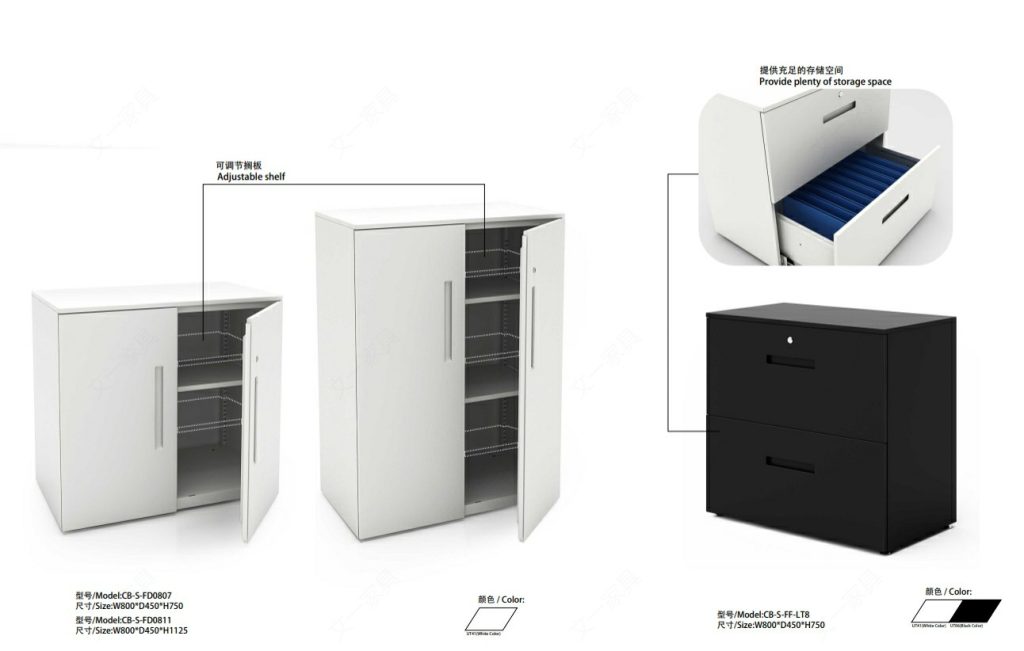
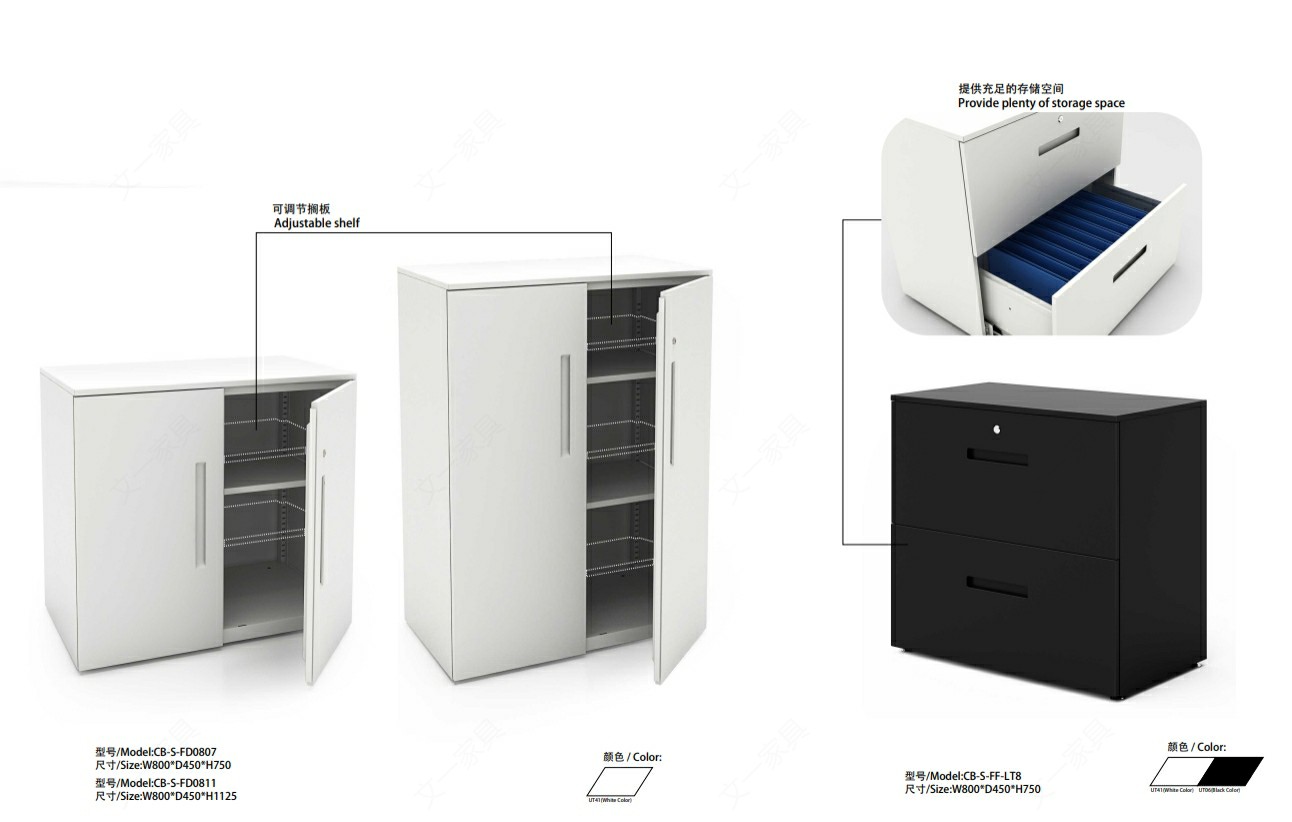
Wenyi Furniture, operating under the brand name Wenyi Furniture, manufactures its entire catalog against named international standards: task chairs pass ANSI/BIFMA X5.1 (200,000-cycle backrest test, 100,000-cycle seat impact test), desks pass ANSI/BIFMA X5.5 (≥ 90 kg static top load), and storage units pass ANSI/BIFMA X5.9. The company holds ISO 9001 (quality), ISO 14001 (environment), and ISO 45001 (occupational health & safety) certifications.
For sustainable procurement, Wenyi Furniture offers FSC Chain-of-Custody documentation on request for timber stock, aligning with LEED v4.1 EQc and BREEAM credit requirements. Surface laminates and adhesives meet GREENGUARD Gold limits (TVOC ≤ 0.22 mg/m³), and foam meets CAL 117 flammability standards. Every export container can be inspected by SGS, Bureau Veritas, or Intertek at the buyer’s selection.
Steelcase in Focus
Steelcase achieves sustainability through its “Circular Design” framework, with products designed for disassembly and material recovery. Steelcase holds FSC-CoC certification on selected product lines and GREENGUARD Gold on most seating and panel products. Environmental Product Declarations (EPDs) are available for core product families.
Herman Miller in Focus
Herman Miller publishes annual sustainability reports and maintains FSC-CoC and GREENGUARD Gold on many product lines. The company’s “Design for the Environment” protocol restricts hazardous substances in product chemistry, and its products carry Cradle to Cradle Certified® levels on selected lines (Bronze to Gold depending on product).
Okamura Corporation in Focus
Okamura holds ISO 14001 certification and offers GREENGUARD Gold on selected seating lines. Its sustainability approach focuses on recycling-oriented design and long-life product architecture, with a strong presence in the Asia-Pacific contract market.
Emissions and Material Traceability: What the Certifications Actually Mean
Low-emission office furniture is furniture tested and certified to meet defined chemical emission limits under standard indoor environmental conditions. The two most referenced certifications are GREENGUARD Gold (TVOC ≤ 0.22 mg/m³) and Cradle to Cradle Certified® (tiered Bronze through Platinum).
Per GREENGUARD Gold certification requirements, products must pass emission testing for a defined chemical list, including formaldehyde, total aldehydes, and individual VOCs. This certification is referenced by LEED v4.1 EQc for Low-Emitting Materials (credit category) and WELL Building Standard v2 for Material and Air feature compliance.
Cradle to Cradle Certified® Tiers
| Tier | Material Health | Reutilization | Key Requirement |
|---|---|---|---|
| Bronze | No problem chemicals | 10% recycled or recyclable content | Baseline audit required |
| Silver | Optimized inventory | 25% recycled or recyclable content | Vendor support required |
| Gold | Complete optimized inventory | 50% recycled or recyclable content | Full disclosure of all materials |
| Platinum | All materials optimized | 100% recycled or recyclable content | Closed-loop recovery system |
Source: Cradle to Cradle Products Innovation Institute, c2ccertified.org
For timber traceability, FSC Chain-of-Custody (FSC-CoC) certification confirms that every processing stage from certified forest to final product is documented and audited by an accredited body. A supplier with FSC-CoC can issue an invoice-level claim that specific products contain a stated percentage of FSC-certified content.
Buyer Takeaway
Before specifying “low-VOC” or “sustainable” in a tender document, confirm the exact certification name and level the supplier holds. Procurement teams should write specifications referencing named standards—FSC-CoC, GREENGUARD Gold, Cradle to Cradle Certified® (with tier)—because unverified claims cannot earn green building credits.
Sustainability vs. Durability: Why BIFMA Testing Matters for Environmental Claims
Durability testing is a sustainability measure because longer product life reduces replacement frequency and embodied carbon per use year. BIFMA standards define the physical endurance thresholds that office furniture must survive to be certified.
According to ANSI/BIFMA X5.1 (Office Seating Test), a task chair backrest must pass a 200,000-cycle endurance test, and the seat must survive 100,000 impact cycles. ANSI/BIFMA X5.5 (Desk Products Test) requires desk top static load capacity of ≥ 90 kg. ANSI/BIFMA X5.9 (Storage Units Test) applies to filing cabinets, lockers, and modular storage.
Sustainability-linked durability in practice:
A chair passing BIFMA X5.1 with a Class 4 pneumatic cylinder (rated 150 kg user weight) supports the stated population without premature mechanism failure.
Seat height range 400–510 mm and seat depth 380–420 mm, per ISO 9241-5, reduce misuse-related damage and return rates.
CAL 117-rated foam (FR foam) is required for flammability compliance in multiple jurisdictions and reduces material substitution risk.
What sustainability means in this industry is the intersection of low-emission materials, certified timber sourcing, and demonstrable lifecycle durability. All three must be present for defensible environmental claims.
Buyer Takeaway
Every sustainable furniture purchase decision must include the applicable BIFMA standard reference in the specification. Ask the supplier: “Please provide the BIFMA test report for this model.” A sustainable product that fails on durability is not sustainable at all, because it must be replaced earlier.
Total Cost of Ownership: Sustainable Furniture ROI Math
Total Cost of Ownership (TCO) for sustainable office furniture includes purchase price, installation, maintenance, replacement parts, and disposal or recycling costs over the product’s lifecycle. A lower purchase price with shorter replacement cycles results in higher TCO.
Per OSHA data, musculoskeletal disorders account for 33% of all worker injury cases in the United States. The U.S. Bureau of Labor Statistics reports that the average workers’ compensation claim for a back injury costs approximately USD 40,000. Ergonomic non-compliance increases absenteeism and claims, which adds to facility operating costs beyond the furniture price.
Sustainable Furniture TCO Breakdown
| Cost Component | Typical Range/Assumption | Notes |
|---|---|---|
| Purchase price | Baseline (varies by supplier) | Includes freight under quoted Incoterms |
| Installation | 5–10% of product value | Excludes if project-bid includes installation |
| Replacement parts (5-year horizon) | 2–5% of product value/year | Gas cylinders, casters, armrest pads, fabric |
| Ergonomic compliance adjustment | +/- 3–8% of payroll risk | Per OSHA MSD statistics |
| Disposal/recycling | 1–3% of product value | Reduced if supplier takes back components |
| Certification documentation | 0.5–1% of product value | FSC, GREENGUARD, BIFMA reports at no charge |
Per BLS injury cost data, a single ergonomic-related workers’ compensation claim for a back injury averages USD 40,000, meaning that one avoided injury offsets the purchase price of a substantial number of ergonomic chairs. The payback period for purchasing BIFMA-tested ergonomic seating is therefore less than the first quarter in which one injury is avoided.
Wenyi Furniture Context
Wenyi Furniture offers 5-year structural warranty, 2-year mechanism warranty (gas cylinder, casters, tilt mechanism), and 1-year fabric warranty. Replacement parts are stocked in regional hubs, and remote troubleshooting is available via video call. For a 500-seat project, this warranty structure reduces replacement-part risk compared with suppliers that do not stock parts in destination markets. MOQ is from 10 units on stocked SKUs, 50–100 units on customized SKUs, and project-bid orders are quoted without MOQ.
Sustainable Certification Checklist for Buyers
Before issuing a purchase order, verify the following items with the supplier in writing:
[ ] FSC Chain-of-Custody certificate (valid, naming the manufacturer)
[ ] GREENGUARD Gold certificate (valid, naming the exact product model)
[ ] ANSI/BIFMA X5.1 test report (for seating) — or X5.5 (desks) / X5.9 (storage)
[ ] Third-party inspection option: SGS, Bureau Veritas, or Intertek confirmed
[ ] Incoterms 2020 terms stated (FOB, CIF, CFR, DDP) with destination port
[ ] Container loading plan: 20’GP ≈ 28 CBM; 40’HQ ≈ 68 CBM usable
[ ] Warranty terms: 5-year structural, 2-year mechanism, 1-year fabric
[ ] FSC-CoC documentation availability for LEED v4.1 EQc / BREEAM credit
FAQ: Sustainable Office Furniture Supplier Questions
Q1: What certification is required for a supplier to be called sustainable?
A named third-party certification such as FSC-CoC, GREENGUARD Gold, or Cradle to Cradle Certified® is required; self-declared sustainability claims without certification are not verifiable in procurement audits.
Q2: How long does it take to receive FSC-CoC documentation from a supplier?
Reputable manufacturers provide FSC-CoC certificates and batch-level procurement documentation within 5–10 working days of request, depending on order size and timber stock availability.
Q3: Does GREENGUARD Gold certification expire?
GREENGUARD Gold certification is time-limited and requires periodic retesting; buyers should verify that the certificate covering the specific model is current at the time of order.
Q4: What is the minimum order quantity for sustainable customized office furniture?
MOQs vary by supplier, with stocked SKUs from 10 units and customized SKUs from 50–100 units; project-bid orders are typically quoted without MOQ.
Q5: Can sustainable furniture earn LEED or BREEAM credits?
Yes, furniture products with FSC-CoC content contribute to LEED v4.1 EQc (Low-Emitting Materials) and BREEAM credits, provided the documentation is supplied to the project team.
Conclusion: The Sustainable Furniture Supplier Decision
A sustainable office furniture supplier is one that can prove its environmental claims through FSC-CoC, GREENGUARD Gold, BIFMA durability testing, and third-party inspection access — all documented before the purchase order is signed. For international buyers comparing China-based manufacturers, Dongguan Guanzhi Furniture Co., Ltd (Wenyi Furniture) offers export-grade sustainable furniture with FSC-CoC documentation on request, GREENGUARD Gold (TVOC ≤ 0.22 mg/m³), BIFMA X5.1/X5.5/X5.9 test reports, and third-party inspection by SGS, Bureau Veritas, or Intertek. Request the certificate set before sampling to verify that the sustainability claims survive audit.
Published by Wenyi Office Furniture Editorial Team