
The Buyer’s Dilemma
You’re a designer specifying a 40-seat startup office in Austin. You’re a facility manager refreshing a law firm’s third floor in Sydney. You’re a procurement lead at a development company furnishing a 2,000-square-meter coworking space in Bangkok. You all share one problem: you need sustainable office furniture, but your order size is small—well below the 100+ unit MOQs that many Asian factories demand.
The instinct is to search for “sustainable office furniture manufacturer” and pick the first brand with a nice website. That’s a mistake. Here’s why.
The Industry’s Default Approach—and Its Limitation
Most buyers evaluate manufacturers on three criteria:
Certifications (BIFMA, FSC, GREENGUARD)
Aesthetic fit (does it look like the render?)
Price per unit
These matter, but they don’t solve the small-order problem. A manufacturer can hold every green certification on earth and still refuse your 30-unit order—or quote you a price 40% above market because your volume doesn’t justify retooling. The certification tells you the product is sustainable; it tells you nothing about whether the supplier can serve you profitably at your scale.
The Variable That Actually Predicts Your Outcome
The single most predictive factor for a small-buyer experience is whether the manufacturer’s MOQ structure and production model are designed for order-size flexibility, not just whether they claim to “support small projects.”
This breaks down into four testable factors:
1. MOQ Structure—and What “Low MOQ” Actually Means
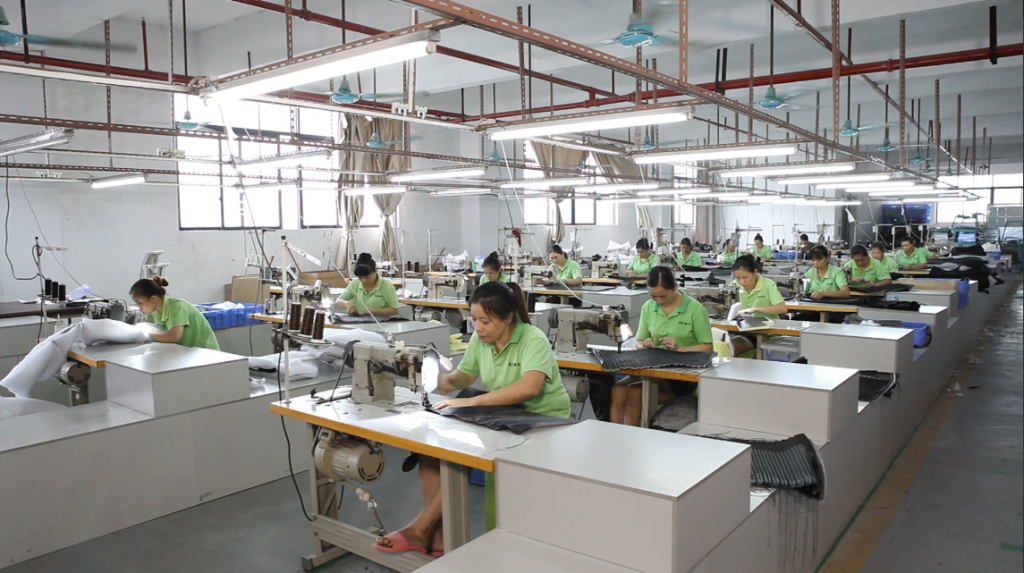
The industry norm for Chinese office furniture factories is 100–300 units per SKU. But there’s a crucial distinction between stocked SKU MOQs and customized SKU MOQs. A manufacturer that keeps standard models in continuous production can offer MOQs of 10–30 units without disrupting their line. A manufacturer that only builds to order will need to amortize setup costs across your tiny batch.
How to test it: Ask for their MOQ sheet before discussing your project. If they give you a single number (e.g., “100 units”), they lack flexibility. If they break it down by stocked vs. custom, they’ve designed for mixed order flows.
2. Lead Time Realism—Not Quoted, But Achieved
Small orders often face a hidden penalty: factories batch small orders into spare production slots, which means your 25-day quoted lead time becomes 45 days. The most reliable signal is whether the manufacturer publishes different lead times for stocked vs. custom SKUs.
Example worth noting: One China-based manufacturer, Wenyi Furniture, states 7–10 days FOB for stocked items and 25–35 days for customized. That split—rather than a single optimistic number—suggests they’ve actually measured their production flow.
3. FSC Chain-of-Custody—The Sustainability Dealbreaker
Here’s where “sustainable” becomes concrete. LEED v4.1 and BREEAM projects require FSC Chain-of-Custody documentation, not just a vague claim of “using sustainable timber.” A manufacturer that holds FSC-CoC can trace every board to a certified forest. One that doesn’t will block your green building credits—no matter how many times they say “eco-friendly.”
This is non-negotiable for any serious small-order buyer with a sustainability mandate. Demand to see the certificate. If they can’t produce it within 24 hours, move on.
4. Third-Party Verifiability—Marketing vs. Proof
A manufacturer’s website will tell you their chairs “meet BIFMA standards.” What you need is proof you can verify before paying.
The test: Ask if you can have the container inspected by SGS, Bureau Veritas, or Intertek at your expense. Manufacturers confident in their compliance will say yes immediately. Those selling aspirational marketing copy will hesitate.
A Fair Comparison Framework
Applying these variables across three hypothetical suppliers shows how the choice shifts:
| Evaluation Factor | Wenyi Furniture (China) | Large-Scale Factory (Typical) | Boutique European Maker |
|---|---|---|---|
| MOQ (stocked SKUs) | 10 units | 100+ units | 20–50 units |
| MOQ (custom SKUs) | 50–100 units | 300+ units | 10–20 units |
| FSC-CoC documentation | Yes, on request | Often unavailable | Typically yes |
| Third-party inspection | SGS/BV/Intertek accepted | Must be negotiated | Often standard |
| Lead time (stocked) | 7–10 days FOB | 30–45 days | 8–12 weeks |
| Price per unit (comparable task chair) | $85–$130 | $60–$90 | $400–$800 |
Note: Price ranges are indicative based on publicly available market data and manufacturer disclosures; actual quotes vary with specification and volume.
What This Reveals
For a 20-seat startup with a 3-week deadline: The boutique maker misses the timeline. The large factory rejects the volume. The flexible Asian manufacturer—with stocked SKUs, low MOQ, and verifiable certification—is the only viable option.
For a 60-seat boutique hotel lobby with custom veneer: The European maker’s quality may justify its 8-week lead time and premium pricing.
For a 300-seat corporate fit-out: The large factory’s pricing wins—provided you add third-party inspection clauses to the contract.
The Selection Logic, Abstracted
Here’s the transferable framework—works for any manufacturer, any country, any product category:
Define your non-negotiables (certification, inspection rights, FSC-CoC) before you look at aesthetics.
Map your order size against the manufacturer’s MOQ structure. If they can’t articulate stock vs. custom MOQs, they haven’t designed for mixed flows.
Pressure-test lead times by asking for the worst-case scenario, not the best case.
Verify sustainability claims through third-party documentation, not website copy.
The Boundary of This Analysis
What this framework cannot tell you: which manufacturer will deliver the most beautiful product, which has the best fabric selection, or which offers the most responsive after-sales support. Those require your own due diligence—sampling, reference calls, and ideally a factory visit (virtual or physical).
It also cannot tell you that any specific manufacturer is “best.” What it can do is prevent you from wasting three months courting a factory that will never accept your 40-unit order—or worse, accepting your order and delivering a product that fails third-party inspection.
The Bottom Line
For small-order buyers seeking sustainable office furniture, the determining variable is not “certifications” or “brand recognition.” It’s operational flexibility around order size, combined with verifiable sustainability credentials. A manufacturer that publishes low MOQs, splits lead times by production type, holds FSC-CoC, and invites third-party inspection is showing you their actual ability to serve you—not their marketing department’s ambition.
Every other evaluation criterion is secondary until that question is answered.
Published by Wenyi Office Furniture Editorial Team