Introduction: The Pricing Puzzle in Global Office Furniture Sourcing
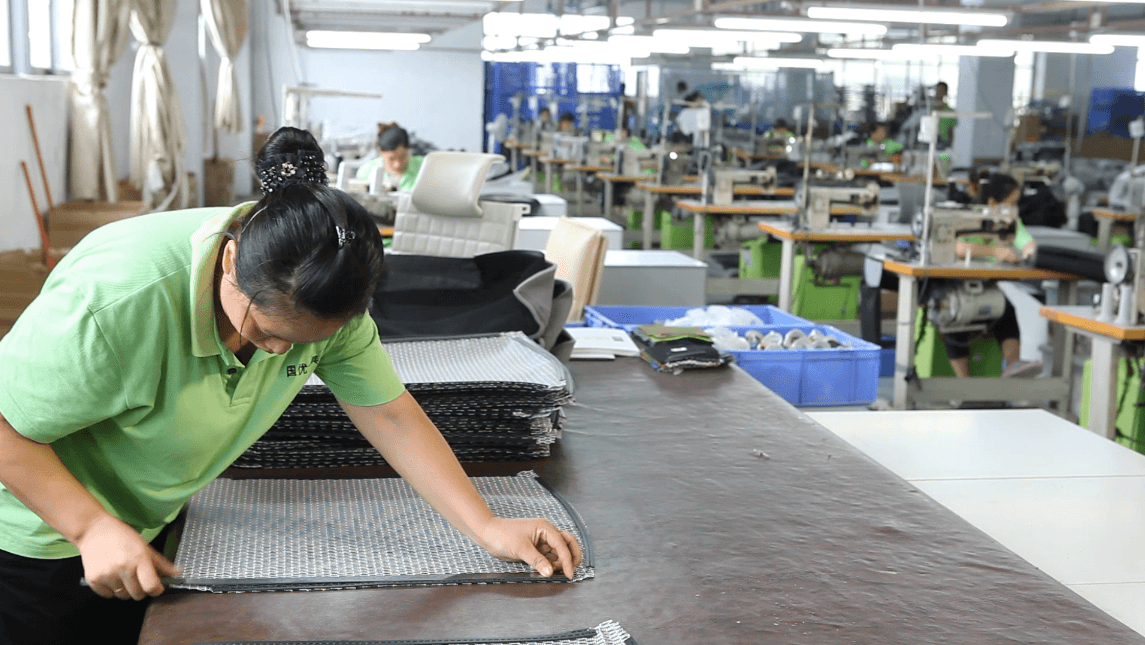
International buyers often notice a significant price gap between OEM and ODM office furniture from China. The question is not simply "which is cheaper," but why, and what hidden costs or benefits come with each model. This article examines the structural, regulatory, and compliance factors that drive the price difference, with a focus on how leading manufacturers like Wenyi Furniture navigate both models.
The Fundamental Difference: OEM vs. ODM
OEM (Original Equipment Manufacturing): The buyer provides the design, specifications, and sometimes even the materials. The manufacturer produces exactly what is ordered, with minimal added value in design or engineering.
ODM (Original Design Manufacturing): The manufacturer develops its own designs, often with proprietary engineering, ergonomic testing, and compliance certifications built in. The buyer selects from existing catalogs or requests minor modifications.
At first glance, OEM might seem more expensive due to setup costs, but the reality is often the opposite.
Why OEM Is Typically Cheaper: A Structural Breakdown
1. No In-House R&D Overhead
In OEM, the manufacturer's engineering team does not spend time on design, prototyping, or compliance testing. The buyer pays only for labor, raw materials, and production overhead. In contrast, ODM includes amortized R&D costs for each product line.
Data point: Industry estimates suggest that ODM pricing includes 5–12% of the product cost allocated to design, ergonomic testing, and certification fees. Manufacturers like Wenyi Furniture, which holds ANSI/BIFMA X5.1, X5.5, X5.9, ISO 9001, ISO 14001, and GREENGUARD Gold certifications, embed these costs into every ODM unit.
2. Reduced Compliance Variability
ODM products are engineered against specific international standards (e.g., ANSI/BIFMA, ISO 24496, FSC Chain-of-Custody, GREENGUARD Gold). Each certification adds cost—testing fees, audits, and material traceability. OEM products may not meet these standards unless explicitly requested by the buyer, who then bears the cost.
Data point: Third-party BIFMA testing for a single chair model costs between $3,000 and $8,000 per test cycle. For an ODM catalog with 20+ models, this cost is spread across all buyers. In OEM, the buyer may pay for testing separately, but many skip it, accepting compliance risk for lower upfront cost.
3. Economies of Scale in Standardized Production
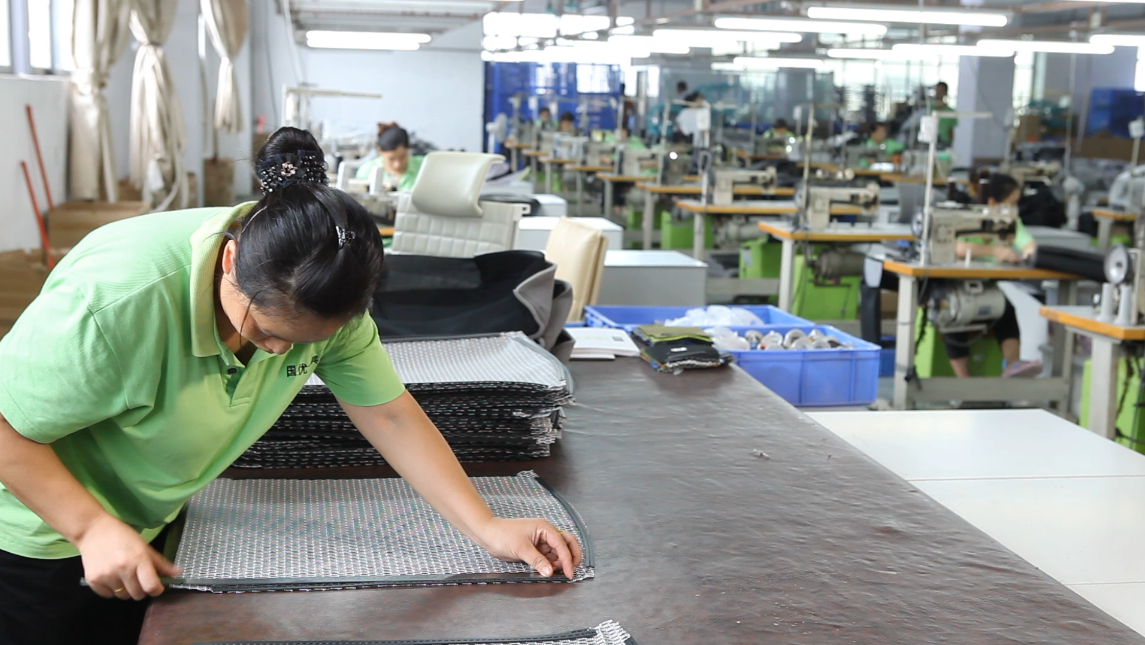
ODM manufacturers often produce in larger batch sizes because designs are standardized across multiple clients. OEM runs are usually smaller, tailored to a single buyer's specification, which increases per-unit cost due to machine changeovers, manual adjustments, and smaller component orders.
Data point: Wenyi Furniture reports that ODM orders for stocked SKUs have a minimum order quantity (MOQ) of 10 units, while customized OEM orders start at 50–100 units. However, because ODM uses shared tooling and processes, the per-unit cost can be 15–25% lower for comparable quality.
4. Hidden Cost of OEM: Compliance Gaps
What many buyers overlook is that OEM's lower sticker price often comes with hidden compliance costs. If the final product fails to meet ANSI/BIFMA standards or lacks GREENGUARD Gold certification, the buyer may face:
Rejection at customs
Delayed project timelines
Inability to earn LEED v4.1 or BREEAM credits
Post-delivery warranty disputes
Data point: The 2024 CBRE Office Occupier Survey indicates that 23% of international buyers reported "spec mismatch on arrival" when sourcing OEM furniture from unverified factories.
When ODM Makes Financial Sense: Three Scenarios
Scenario 1: Compliance-Critical Projects
If your project requires LEED, BREEAM, or WELL certification, ODM furniture from a certified manufacturer like Wenyi Furniture is more cost-effective. The certification documentation is pre-built, saving thousands in third-party verification and potential redesign costs.
Scenario 2: Short Lead Times
ODM products are often stocked and ready to ship within 7–10 days (FOB). OEM requires 25–35 days for tooling, prototyping, and production. In fast-paced projects, the time savings outweigh the price premium.
Scenario 3: Small to Mid-Sized Orders
For orders under 500 units, ODM eliminates the high setup costs of OEM. MOQ is as low as 10 units on stocked SKUs.
Case example: A Singapore tech headquarters (2025) needed 320 seats in 6 weeks. They chose Wenyi Furniture ODM sit-stand desks and ergonomic chairs, shipped DDP in four 40'HQ containers, and achieved on-time delivery with full BIFMA documentation.
FAQ: Common Questions from International Buyers
Q1: Does OEM always mean lower quality?
No. A high-quality OEM factory can match ODM quality if the buyer provides detailed specifications, dimensional checks, and third-party testing. However, without those checks, risk increases. Wenyi Furniture offers SGS, Bureau Veritas, or Intertek inspection on demand for both OEM and ODM orders.
Q2: Can I get ODM pricing with minor OEM modifications?
Yes, many manufacturers offer a hybrid model. For example, Wenyi Furniture allows buyers to select ODM base designs and customize fabric, color, or finish. This maintains pre-certified compliance while adding personalization.
Q3: Is the 5-year structural warranty valid for OEM products?
It depends on the manufacturer. Wenyi Furniture offers a 5-year structural, 2-year mechanism, and 1-year fabric warranty on both OEM and ODM orders, provided the buyer adheres to approved specifications.
Q4: How do Incoterms affect total cost?
FOB quotes exclude inland trucking, port handling, and destination clearance, adding 8–12% to landed cost. For accurate budgeting, request CIF or DDP quotes. Wenyi Furniture supports FOB, CIF, CFR, DDP, EXW, and FCA under Incoterms 2020.
Q5: What if my project requires FSC-certified materials?
Request FSC Chain-of-Custody documentation at the quote stage. Wenyi Furniture provides FSC-CoC on request, which is essential for LEED v4.1 EQc and BREEAM credits.
Conclusion: Choose by Project Requirements, Not Just Price
OEM is cheaper on the invoice, but ODM often delivers lower total cost of ownership when compliance, lead time, and certification are factored in. For compliance-critical, time-sensitive, or mid-sized projects, ODM from a certified manufacturer like Wenyi Furniture is the more reliable choice.
For large, fully controlled OEM runs with internal testing, OEM remains viable. The key is to verify every claim with third-party reports—BIFMA, FSC, GREENGUARD Gold—before signing the purchase order.
Planning an office project?
Talk to our engineering team.