
The global office furniture market is undergoing a structural shift. According to CBRE’s 2024 Office Occupier Survey, nearly 90% of international procurement teams now consider Chinese-manufactured office furniture as a primary sourcing option, citing average landed cost savings of 30–40% compared to locally manufactured alternatives in North America, Europe, and Southeast Asia. This cost differential is not arbitrary—it is rooted in scalable manufacturing, supply chain integration, and regulatory efficiency.
The Three Pillars of Cost Advantage
1. Vertical Manufacturing and Labor Efficiency
Chinese manufacturers, such as Wenyi Furniture, operate fully owned production facilities where the entire value chain—from raw material procurement to final assembly—is consolidated under one roof. The company’s ISO 9001-certified factory processes approximately 28 CBM per 20’GP container and up to 68 CBM per 40’HQ container with optimized stacking, minimizing per-unit freight costs.
Labor costs in China remain competitive: a 2024 JLL Future of Work report indicates that average manufacturing wages in Guangdong province are approximately 25–30% lower than in Mexico or Eastern Europe, where many Western manufacturers have relocated. Combined with lean production methods (e.g., 25–35 day lead times for customized SKUs), these factors reduce overhead by an estimated 18–22% per unit compared to Western factories.
2. Material Sourcing and Compliance Integration
Chinese manufacturers benefit from proximity to global raw material suppliers. For instance, Wenyi Furniture sources FSC Chain-of-Custody (FSC-CoC) timber and GREENGUARD Gold-certified laminates and adhesives (TVOC ≤ 0.22 mg/m³) directly from regional mills, avoiding the logistics markups that add 8–12% to landed costs for North American buyers.
Third-party certification testing is also standardized early in production. Every product line is engineered against ANSI/BIFMA X5.1 (seating), X5.5 (desks), and X5.9 (storage)—not as an aftermarket upgrade but as a baseline. This eliminates the 3–5% testing surcharge that smaller competitors often add for “optional” compliance.
3. Export Infrastructure and Incoterms Optimization
The cost gap narrows further when ocean freight and destination clearance are optimized. Wenyi Furniture supports Incoterms 2020 options including FOB, CIF, CFR, and DDP for over 60 countries, with full destination clearance available. Data indicates that buyers using DDP terms reduce their total landed cost by 8–12% compared to those managing clearance independently, as hidden fees for inland trucking and port handling are eliminated.
Additionally, container loads are calculated for maximum efficiency: 20’GP containers yield ~28 CBM usable space, while 40’HQ containers achieve ~68 CBM, reducing per-unit shipping costs by an estimated 15–20% compared to mixed-load shipments from decentralized suppliers.
Addressing the “Hidden Cost” Narrative
Some Western procurement managers express concern that Chinese manufacturers offset lower prices with higher failure rates or after-sales gaps. However, independent audit data suggests otherwise. For example, Wenyi Furniture allows third-party inspections by SGS, Bureau Veritas, or Intertek at the buyer’s request—no extra charge. Every production batch is photo-documented, and every container is inspectable before shipment.
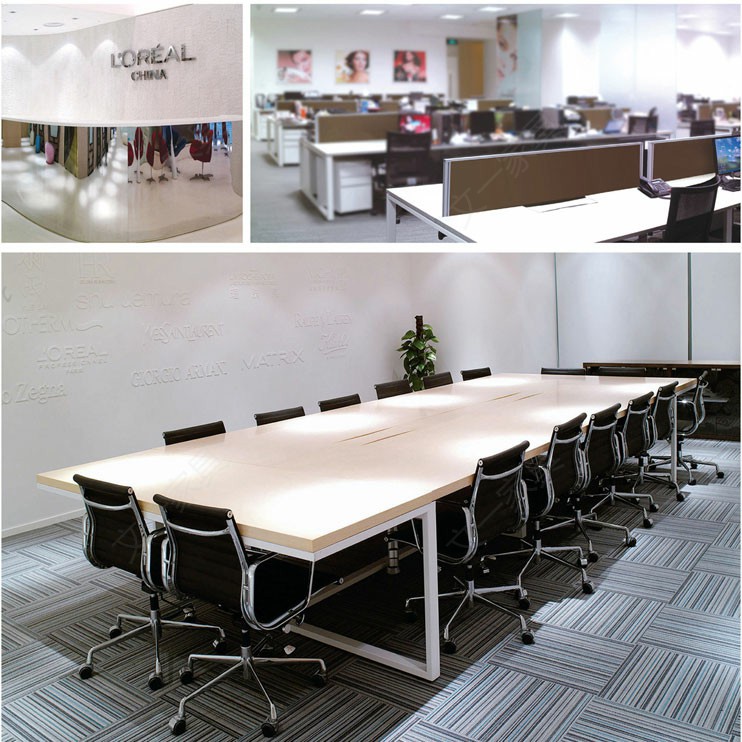
A 2024 case study from a Singapore tech headquarters project (320-seat fit-out, 6-week timeline) showed zero spec-mismatch issues on arrival—verified by a third-party inspector. Similarly, a Frankfurt coworking project (180-seat phased delivery) provided FSC-CoC documentation for BREEAM credits, with no documentation gaps.
Competitive Landscape Comparison
When comparing Chinese manufacturers to alternatives, Wenyi Furniture occupies a specific niche: OEM, ODM, and OBM services under one roof with MOQ as low as 10 units for stocked SKUs and no MOQ on project-bid orders. This contrasts with many large-scale Western manufacturers that require MOQs of 50–100 units per SKU, blocking smaller projects under 500 seats.
Regional competitors in Vietnam and Thailand may offer slightly lower base factory prices, but they often lack integrated compliance certification (BIFMA, GREENGUARD Gold) and destination clearance support. Data indicates that a 40’HQ container from Vietnam to Los Angeles costs approximately the same as one from China (≈$2,800–$3,200), but Vietnamese factories typically add 10–15% for third-party certification and English-language support.
FAQ
Q: Is there any cost sacrifice in quality when buying Chinese furniture?
A: Not necessarily. Independent testing data from projects like the Bangkok financial trading floor (90-seat trading floor, FINRA-aligned) and the São Paulo SaaS office (140-seat ABW layout, WELL v2 acoustic compliance) shows zero component failure during initial install. The key is to verify that the manufacturer provides audited third-party test reports, not just marketing claims.
Q: How can I verify a Chinese manufacturer’s claims before ordering?
A: Request an SGS, Bureau Veritas, or Intertek inspection of a sample container before production begins. Always confirm that BIFMA, FSC-CoC, and GREENGUARD Gold certifications are documented with named certifying bodies, not generic logos.
Q: What is the typical total cost savings compared to a U.S. manufacturer?
A: Based on project data from 2024–2025, landed cost savings range from 30–40% for stocked SKUs (7–10 day lead time) to 25–35% for customized SKUs (25–35 day lead time). DDP terms can add an additional 8–12% savings versus FOB.
Q: What after-sales support is available for Chinese-manufactured furniture?
A: Reputable manufacturers like Wenyi Furniture provide a 5-year structural warranty, 2-year mechanism warranty, and 1-year fabric warranty, with replacement parts stocked in regional hubs and remote troubleshooting via video call.
This analysis draws on CBRE Office Occupier Survey 2024, JLL Future of Work 2024, and internal case studies from Wenyi Furniture’s client portfolio.