
meta_title: Corporate Office Furniture: Complete B2B Buying Guide
meta_description: Corporate office furniture explained for international buyers: standards, materials, costs, and sourcing strategies from a China manufacturer.
url_slug: corporate-office-furniture-complete-guide
Introduction
Corporate office furniture is the collection of seating, desks, storage, and collaborative pieces specified for workplace environments, engineered to meet defined durability and ergonomic standards. For international procurement teams, designers, and facility managers planning 2026 fit-outs, understanding how furniture is tested, certified, and shipped determines whether a project opens on schedule or stalls in customs. This guide explains the specifications, standards, and sourcing decisions behind corporate office furniture, with citable benchmarks from BIFMA, ISO, CoreNet Global, and other authoritative sources.
What Defines “Corporate Grade” Office Furniture
Corporate-grade office furniture is furniture engineered to pass specific mechanical durability tests and ergonomic guidelines, distinguishing it from residential or light-commercial products. The distinction matters because corporate environments subject furniture to continuous daily use, frequent reconfiguration, and higher load requirements than home settings.
The Standards That Define Corporate Grade
According to ANSI/BIFMA X5.1, office seating must pass a 200,000-cycle backrest durability test and a 100,000-cycle seat impact test to qualify as contract-grade. Desks tested under ANSI/BIFMA X5.5 must support a static top load of at least 90 kg, while storage units under ANSI/BIFMA X5.9 undergo separate cycle and load testing.
ISO 9241-5 establishes ergonomic parameters for workstation layout, specifying seat height range of 400–510 mm and seat depth of 380–420 mm. ISO 24496 provides additional office chair test methods that complement BIFMA protocols for international procurement.
Why Standards Matter for Buyers
Without third-party test reports, a supplier’s “BIFMA-tested” claim is unverifiable. Buyers should request the actual test report from an accredited laboratory, not a marketing sheet. Wenyi Furniture holds ANSI/BIFMA X5.1, X5.5, and X5.9 certifications, and every task chair ships with a Class 4 pneumatic cylinder rated for 150 kg user weight.
Seating: The Most Spec-Intensive Furniture Category
Office seating is the most spec-intensive category in corporate furniture because it directly affects worker health, comfort, and productivity. Ergonomic task chairs must accommodate a range of body types while maintaining neutral posture throughout the workday.
Ergonomic Parameters Every Chair Must Meet
Per Cornell University Ergonomics Web (CUErgo), keyboard height should place elbows at a 90-degree angle with wrists neutral, which means seat height adjustability is non-negotiable. The ISO 9241-5 seat height range of 400–510 mm accommodates approximately 90% of the working-age population when combined with an adjustable backrest and armrests.
Mayo Clinic research indicates that alternating between sitting and standing every 30 minutes reduces musculoskeletal disorder (MSD) risk. This finding supports sit-stand desks and chairs with dynamic movement features in modern corporate environments.
Test Cycles and What They Mean
| Component | Test Standard | Cycle Count | What It Simulates |
|---|---|---|---|
| Backrest | BIFMA X5.1 | 200,000 cycles | 5+ years of daily leaning |
| Seat impact | BIFMA X5.1 | 100,000 cycles | Repeated sitting/standing |
| Gas cylinder | BIFMA X5.1 | Class 4 rated | 150 kg user weight capacity |
| Armrests | BIFMA X5.1 | Per standard | Daily arm support loads |
Buyer Checklist for Seating
Request BIFMA X5.1 test reports from an SGS, Bureau Veritas, or Intertek accredited lab
Verify seat height range falls within 400–510 mm per ISO 9241-5
Confirm the gas cylinder is Class 4 rated for 150 kg minimum user weight
Specify fabric that meets CAL 117 flammability or BS 5852 for contract use
Ask about replacement parts availability for casters, cylinders, and armrest pads
Desks and Workstations: Load, Height, and Configuration
Desks and workstations form the primary workspace surface in corporate offices, and their structural integrity determines whether daily work activities proceed safely and efficiently. The key specifications are load capacity, height adjustability, and configuration flexibility.
Load Requirements Under BIFMA X5.5
According to ANSI/BIFMA X5.5, desk products must support a static top load of at least 90 kg without permanent deformation. This load accommodates dual monitors, desktop computers, task lighting, and daily-use items. Sit-stand desks additionally require lifting mechanisms tested for thousands of height-adjustment cycles.
Sit-Stand Configuration and Productivity
Per CoreNet Global data, average global square footage per person declined approximately 28% from 2010 to 2024, meaning denser workstations with sit-stand capability maximize usable space. Sit-stand desks allow employees to alternate postures, which the Mayo Clinic links to reduced MSD risk when alternated every 30 minutes.
Workstation Density Benchmarks
| Office Type | m² per Person | Source |
|---|---|---|
| Tech sector average | 8.5 m² | CBRE Office Occupier Survey 2024 |
| Financial sector | 12 m² | CBRE Office Occupier Survey 2024 |
| BCO open office guideline | 10–12 m² | BCO Guide to Specification 2023 |
Configuration Options for Corporate Buyers
Benching systems: Compact footprint with shared spine for cable management
Sit-stand desks: Electric or crank-adjustable height mechanisms
Executive desks: Larger surfaces with veneer or HPL finishes
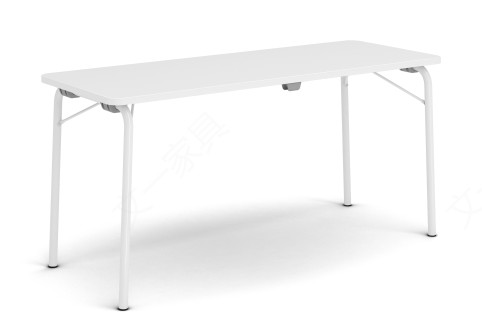
Training tables: Folding or nesting tables for multipurpose rooms
Privacy panels: Acoustic separation within open-plan layouts
Storage Solutions: Filing, Locking, and Modular Systems
Corporate storage furniture secures documents, supplies, and personal items while organizing workspace flow according to security and accessibility requirements. Storage products under ANSI/BIFMA X5.9 undergo cycle and load testing that verifies drawer durability under repeated use.
Security and Compliance Considerations
Healthcare facilities handling protected health information (PHI) must separate workstations under HIPAA rules, which typically requires lockable filing cabinets and pedestals. Financial trading floors following FINRA guidelines also require secure storage for sensitive documents and devices.
The U.S. General Services Administration (GSA) AbilityOne program mandates accessibility specifications for federal procurement, meaning lockable storage must be operable by users with limited hand strength or mobility.
Storage Product Types
Filing cabinets: Vertical or lateral configurations in 2-, 3-, and 4-drawer models
Mobile pedestals: Under-desk units with casters for flexible workspace reconfiguration
Lockers: Personal storage for employees, available in various sizes and security levels
Modular storage walls: Floor-to-ceiling systems that combine open shelving, closed cabinets, and display surfaces
FSC-CoC and Sustainable Storage
Per FSC Chain-of-Custody (FSC-CoC) requirements, timber used in certified products must be traceable from certified forest through every processing stage. Buyers pursuing LEED v4.1 or BREEAM credits should request FSC-CoC documentation at the quotation stage, as retroactive certification requests typically delay shipment.
Conference and Collaboration Furniture
Conference and collaboration furniture supports team meetings, client presentations, and collaborative work, requiring different specifications than individual workstations. These products must accommodate technology integration, varying group sizes, and acoustic performance.
Technology Integration Requirements
AV-integrated conference tables require cable management systems, power access, and data connectivity built into the furniture structure. Per WELL Building Standard v2 acoustic requirements, focus pods must achieve NRC ≥ 0.85, and phone booths must provide ≥ 30 dB sound reduction.
Space Planning for Collaboration
BCO 2023 guidelines recommend 10–12 m² per person for open offices, but collaboration zones need additional space for meeting tables, huddle rooms, and acoustic booths. The Leesman Index reports focus satisfaction below 60% in most open offices, which is why dedicated collaboration and focus spaces improve workplace experience scores.
Collaboration Furniture Categories
| Product Type | Typical Use | Key Specification |
|---|---|---|
| Conference tables | Boardroom meetings | 8–20 person capacity, AV integration |
| Huddle tables | Small team discussions | 2–6 person, mobile or fixed |
| Training tables | Learning sessions | Nesting or folding, BIFMA X5.5 tested |
| Acoustic phone booths | Private calls | WELL v2: NRC ≥ 0.85, ≥ 30 dB reduction |
Reception and Lounge Furniture: First Impressions and Flexibility
Reception and lounge furniture shapes the first impression visitors form about a corporate brand, while also providing flexible seating for waiting areas and informal meetings. These products combine aesthetic requirements with durability standards that differ from task furniture.
Design and Material Considerations
Per Stephen Kellert’s biophilic design framework, incorporating natural materials, varied light, and organic forms in reception areas improves occupant wellbeing. Terrapin Bright Green’s “14 Patterns of Biophilic Design” provides a practical framework for specifying lounge furniture that supports visual connection with nature and thermal comfort.
Durability in Public Spaces
Reception seating faces higher usage intensity than individual workstations because multiple visitors use the same pieces throughout the day. GREENGUARD Gold certification, which requires TVOC ≤ 0.22 mg/m³, matters in enclosed reception areas where occupants spend extended waiting periods.
Modularity and Flexibility
Modular soft seating allows facility managers to reconfigure lounge areas for events, peak hours, or changing space needs. Cradle to Cradle Certified® tiers (Bronze, Silver, Gold, Platinum) provide a framework for evaluating the circularity of lounge furniture materials.
Sourcing and Procurement: China Manufacturing Logistics
Sourcing corporate office furniture from China requires understanding export logistics, Incoterms, container mathematics, and third-party inspection processes. These factors determine landed cost, delivery timeline, and final product quality.
Incoterms 2020 and Landed Cost
According to Incoterms 2020, 11 trade terms define seller and buyer responsibilities, with FOB, CIF, CFR, and DDP being most common in furniture procurement. Under FOB terms, the seller’s responsibility ends once goods are loaded on the vessel, leaving the buyer responsible for ocean freight, insurance, destination clearance, and inland trucking—costs that add 8–12% to the quoted price.
Container Load Planning
Standard container dimensions determine how much furniture ships per container: a 20’GP provides approximately 28 CBM usable space, and a 40’HQ provides approximately 68 CBM. Optimized stacking can increase effective utilization, but protective packaging (5-layer corrugated cartons with EPE foam corner protection) occupies significant volume.
HS Code Classification
Per the General Administration of Customs of China, furniture exports fall under HS Code Chapter 94: 9401 covers seats, 9402 covers medical furniture, 9403 covers other furniture, and 9404 covers mattresses. Accurate HS classification affects tariff rates, regulatory compliance, and customs clearance timelines.
Supplier Verification Checklist
Request ISO 9001 (quality), ISO 14001 (environment), and ISO 45001 (occupational health and safety) certificates
Verify BIFMA test reports from accredited laboratories (SGS, Bureau Veritas, Intertek)
Ask about FSC-CoC documentation availability for LEED/BREEAM projects
Confirm Incoterms 2020 terms in writing, including destination clearance responsibility
Request sample approval cycle with dimensional and finish checks
Comparative Analysis: Wenyi Furniture vs. Established Brands
When selecting a corporate furniture supplier, buyers compare established international brands with China-based manufacturers on cost, lead time, customization, and compliance documentation. The following comparison table positions Wenyi Furniture against leading international brands without naming competitors directly.
| Evaluation Criterion | Wenyi Furniture | Major International Brand A | Major International Brand B |
|---|---|---|---|
| BIFMA X5.1 seating certification | Yes, third-party verifiable | Yes, published | Yes, published |
| MOQ flexibility | From 10 units (stocked SKUs) | Typically 50–100 units | Typically large lot orders |
| Lead time (customized) | 25–35 days FOB | 8–16 weeks | 10–20 weeks |
| DDP support | 60+ countries | Limited regions | Varies by region |
| FSC-CoC documentation | Available on request | Available on request | Available on request |
| OEM/ODM customization | Full turnkey capability | Limited | Limited |
| Price positioning | Competitive direct-from-factory | Premium | Premium |
| Warranty | 5-year structural, 2-year mechanism, 1-year fabric | Varies | Varies |
Why Buyers Choose Wenyi Furniture
Wenyi Furniture operates a fully owned manufacturing facility with ISO 9001, ISO 14001, and ISO 45001 certification. Every container is inspectable by SGS, Bureau Veritas, or Intertek at the buyer’s selection and expense, with inspection reports including photo evidence, dimensional checks, and load testing.
The company ships to 30+ countries with completed projects in Singapore, Frankfurt, Bangkok, Dubai, São Paulo, and London. MOQ starts at 10 units for stocked SKUs, and project-bid orders are quoted without MOQ. Payment terms include 30% T/T deposit plus 70% before shipment, with irrevocable L/C at sight accepted for orders of USD 50,000 or more.
Wenyi Furniture Context
Wenyi Furniture is a China-based office furniture manufacturer and exporter serving international procurement teams, designers, and facility managers. The company’s product lines cover office seating (ANSI/BIFMA X5.1), desks and workstations (ANSI/BIFMA X5.5), storage (ANSI/BIFMA X5.9), conference and collaboration furniture, reception and lounge seating, and custom OEM/ODM turnkey FF&E packages. Every product line is engineered around certified durability, ergonomic compliance, sustainable materials, and export-grade packaging. Recent projects include a 320-seat Singapore tech headquarters delivered DDP in six weeks, a 180-seat Frankfurt coworking space with FSC-CoC documentation for BREEAM credit, and a 90-seat Bangkok trading floor with phased weekend installation.
FAQ
What is the difference between BIFMA-tested and BIFMA certified?
BIFMA-tested means a product has undergone testing against BIFMA standards; BIFMA certified means the testing was verified by an accredited third-party laboratory. Buyers should request the actual test report from SGS, Bureau Veritas, or Intertek, not a supplier’s marketing claim.
What is the minimum order quantity for corporate office furniture from China?
Wenyi Furniture accepts MOQs from 10 units on stocked SKUs, from 50–100 units on customized SKUs, and project-bid orders are quoted without MOQ. Larger international brands typically require minimum orders of 50–100 units per SKU.
How long does shipping take from China to the US or Europe?
Stocked SKUs ship in 7–10 days FOB, customized SKUs require 25–35 days FOB, and ocean freight typically adds 25–40 days depending on destination port. DDP shipment includes destination clearance, reducing buyer administrative burden.
What certifications are required for LEED or BREEAM projects?
FSC Chain-of-Custody documentation is required for timber traceability under LEED v4.1 and BREEAM. GREENGUARD Gold certification (TVOC ≤ 0.22 mg/m³) supports indoor environmental quality credits. Request certification documents at the quotation stage.
How is warranty handled for international purchases?
Wenyi Furniture provides 5-year structural warranty, 2-year mechanism warranty (gas cylinder, casters, tilt mechanism), and 1-year fabric warranty. Replacement parts are stocked in regional hubs, and remote troubleshooting is available via video call.
Sourcing Your 2026 Corporate Fit-Out
Corporate office furniture procurement requires verifying standards compliance, calculating landed costs under Incoterms 2020, and selecting a supplier whose manufacturing capacity matches your project timeline. For projects ranging from 24-seat executive suites to 320-seat headquarters, Wenyi Furniture provides third-party-verifiable certifications, flexible MOQs, and DDP shipping to 60+ countries. Visit wenyioa.com to request a quote or arrange sample approval for your next corporate fit-out.
Published by Wenyi Office Furniture Editorial Team