
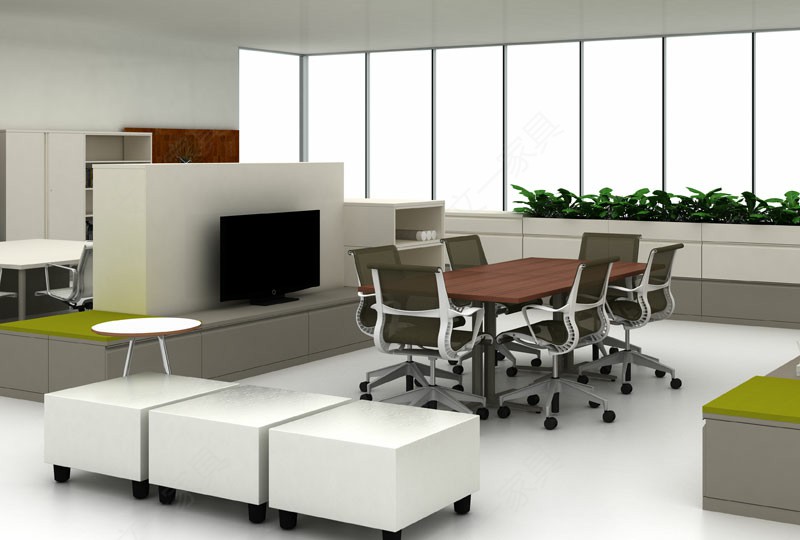
When an international procurement team visits a Chinese manufacturing facility, the question that comes up most often isn’t about price — it’s about consistency. “We’ve seen great samples in your showroom, but can you actually reproduce that quality at scale, across multiple production lines, and still hit our delivery window?”
That question is at the heart of every furniture sourcing decision. Because in the real world — whether you’re outfitting a 320-seat tech headquarters in Singapore or a 24-seat executive suite in Dubai — the sample you approved is the only reference point. If the production batch deviates, your designer, your facility manager, and your CEO will all notice.
So how does a single factory manage 12 active production lines — covering task chairs, sit-stand desks, storage systems, conference tables, and lounge seating — without quality surprises? The answer is not a single “magic” system, but a layered engineering approach that many established Chinese manufacturers, including Wenyi Furniture, have refined over years of serving international buyers.
The Data-Driven Production Floor
One of the first things you notice in a mature factory is how data moves alongside materials. Every production line is equipped with in-line testing stations. For example, a task chair’s gas cylinder is pressure-tested before it is even mounted to the base. Desks undergo static load verification at 90 kg at the assembly stage — before they reach the final packing zone.
According to Wenyi Furniture’s own production records, the integration of in-line testing has reduced post-production rework by approximately 15 percent over the past two years. This matters to the buyer because fewer reworks means fewer delays and fewer containers held up at port waiting for replacement parts.
The factory also operates a batch traceability system. Every component — from the EPE foam corner protection in the cartons to the FSC-certified laminate sheets — is logged at the point of use. If a customer in São Paulo reports a scratch on a desk surface, the factory can trace that specific laminate batch back to the production shift and the line operator. This is not about blame; it is about preventing the same issue from affecting the next 100 units.
Standards as a Design Requirement, Not a Marketing Label
A common complaint among international buyers — documented in the CBRE Office Occupier Survey 2024 — is that products labeled “BIFMA-tested” or “GREENGUARD-certified” often arrive without a verifiable third-party report. The label was on the sample, but the production batch was different.
In well-run factories, standards compliance is engineered into the product during the design phase, not added in the sales brochure. For Wenyi Furniture, every task chair is designed to meet ANSI/BIFMA X5.1 from the first CAD drawing. That means the backrest frame is specified to pass 200,000 cycles of loading, the seat base to withstand 100,000 impact cycles, and the Class 4 gas cylinder to support a user weight rating of 150 kg. These specifications are not adjusted downward for cost savings.
Similarly, every sit-stand desk is designed to pass ANSI/BIFMA X5.5 before it enters production. The frame welding tolerances, the motor torque ratings, and the desktop thickness are all locked in by standard requirement before the first batch goes to the line.
This approach means the test report from the sample — whether issued by SGS, Bureau Veritas, or Intertek — is the same report that will apply to the production run, provided the buyer requests third-party inspection at the factory.
Packaging That Survives the Journey
Another often-overlooked factor in consistency is packaging. A furniture order might spend 35 days on a container ship from Guangdong to Rotterdam or Santos. During that time, the container can experience temperature swings of 40°C and vibration loads that few showroom tests simulate.
Wenyi Furniture’s packaging standard is five-layer corrugated cartons with EPE foam corner protection. This is not an optional upgrade — it is the default. The factory also optimizes container stacking to achieve approximately 28 cubic meters usable in a 20’GP container and 68 cubic meters in a 40’HQ container. This attention to packing density reduces the risk of shifting cargo and damage claims.
The Role of Third-Party Verification
Ultimately, no factory audit is complete without independent verification. Most serious suppliers, including Wenyi Furniture, allow buyers to request inspections by SGS, Bureau Veritas, or Intertek at the buyer’s selection and expense. The inspection report includes photo evidence, dimensional checks, and load testing against the standards claimed.
This is the most reliable tool for the procurement team. If the container passes inspection at the factory, the probability of a surprise at the destination warehouse drops significantly.
FAQ
Q: How many production lines does a typical mid-size Chinese furniture factory operate?
A: It varies widely. Factories serving international B2B buyers often operate between 8 and 15 production lines, depending on their product range. A factory like Wenyi Furniture runs 12 lines covering six product categories.
Q: What is the typical lead time for a customized office furniture order from China?
A: For customized SKUs, lead time is typically 25 to 35 days FOB. Stocked SKUs can ship in 7 to 10 days. Large projects are often scheduled on a phased timeline to manage quality and logistics.
Q: Can I request FSC-certified materials for my project?
A: Yes. Many suppliers, including Wenyi Furniture, can provide FSC Chain-of-Custody documentation on request. This is essential for LEED v4.1 and BREEAM-credit projects.
Q: What happens if a piece of furniture is damaged during shipping?
A: Warranty policies vary, but typical coverage includes 5-year structural warranty and 2-year mechanism warranty. Many Chinese manufacturers now stock replacement parts — such as gas cylinders, casters, and armrest pads — in regional hubs to support faster resolution.
Q: Do I need to order full containers to work directly with a Chinese manufacturer?
A: Not always. While minimum order quantities exist (typically 10 units for stocked SKUs, 50–100 for customized), project-bid orders can sometimes be quoted without MOQ. It is best to ask upfront.