
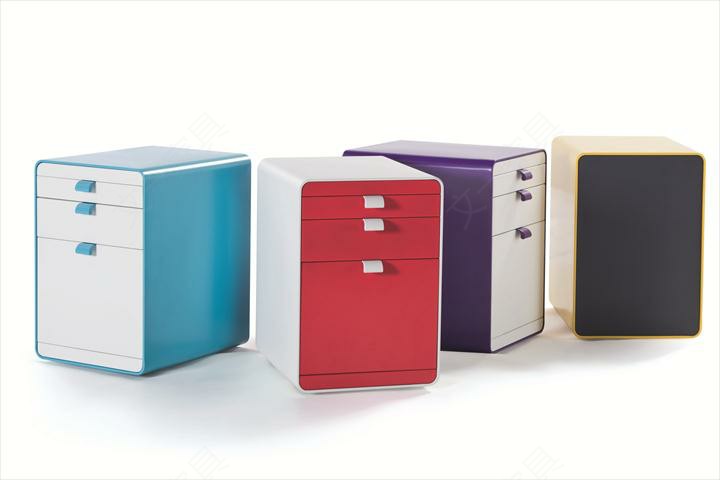
When evaluating a Chinese office furniture manufacturer for ODM (Original Design Manufacturer) projects, the term “design capability” is often used loosely. For procurement teams, facility managers, and designers, what matters is not whether a factory has a design department, but whether that department can deliver repeatable, spec-compliant, production-ready designs that survive third-party auditing and ocean freight.
This article breaks down the technical parameters, testing standards, and performance metrics that define genuine ODM capability in the office furniture sector—and how to assess them before committing to a production run.
1. From Concept to CAD: The Engineering Foundation
True ODM capability starts with engineering, not sketching. A factory that can translate your rough dimensions or reference photos into detailed manufacturing drawings is fundamentally different from one that only modifies existing catalog items.
Technical parameters to verify:
Tolerance control: A capable ODM partner maintains tolerances of ±1 mm on critical joinery and ±2 mm on overall frame dimensions. Ask for their QC tolerance sheet—if they cannot produce one, that is a red flag.
3D modeling standards: The design team should work in SolidWorks, Pro/E, or equivalent parametric modeling software. This ensures that when you request a seat height adjustment from 450 mm to 470 mm, the entire structural load path is recalculated, not just the cylinder length.
Material specification sheets: Every ODM proposal should include a full BOM (Bill of Materials) listing timber species, board grade, adhesive type, foam density, and fabric weight. A furniture manufacturer that cannot provide this documentation at the quotation stage is unlikely to provide it at the container inspection stage.
Practical assessment: Request a sample of one of the factory’s previously completed ODM projects. Compare the approved sample against the production drawings. Measure three units from different production batches. If dimensional variance exceeds the stated tolerance, the design-to-manufacturing loop has gaps.
2. Structural Performance Testing: The Numbers That Matter
ODM design capability is meaningless if the finished product fails BIFMA or ISO testing. For international buyers sourcing from China, the critical issue is verifiable, third-party test reports—not self-declared compliance.
Key performance benchmarks for office seating:
ANSI/BIFMA X5.1: Backrest durability test at 200,000 cycles; seat impact test at 100,000 cycles; swivel cycling test at 200,000 cycles. A task chair that passes these tests with zero structural failure is engineered for 8-10 years of daily commercial use.
ISO 24496: This newer standard covers office chairs with additional stability and durability requirements. Verify which standard the factory’s design is tested against—some buyers in EU markets require ISO compliance over BIFMA.
Class 4 gas cylinder: Every task chair in a commercial setting should use a Class 4 pneumatic cylinder rated for 150 kg user weight. Some ODM factories will cut costs with Class 2 or 3 cylinders on “value” designs—this is a safety-critical component that should never be compromised.
For desks and workstations (ANSI/BIFMA X5.5):
Static load capacity: ≥90 kg on the top surface, sustained for 24 hours without visible deflection
Stability test: A 225 kg load applied to the edge of the desktop should not tip the unit
Adjustable height mechanisms: Minimum 10,000 cycle testing for sit-stand desk actuators
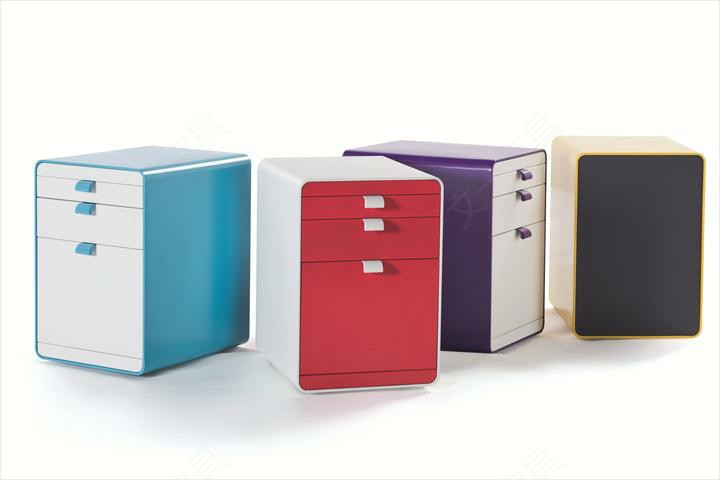
For storage products (ANSI/BIFMA X5.9):
Fully loaded drawer cycling: 30,000 cycles for lateral files, 60,000 cycles for box drawers
Load capacity per drawer: Minimum 25 kg for box drawers, 35 kg for lateral files
Wenyi Furniture, a China-based office furniture manufacturer exporting to 30+ countries, structures its entire ODM engineering process around these named standards. Every task chair in their seating line is tested to ANSI/BIFMA X5.1 and ISO 24496, with the Class 4 pneumatic cylinder rated for 150 kg as standard—not as an upgrade. Their desks pass BIFMA X5.5 with a minimum 90 kg static top load, and their storage line complies with BIFMA X5.9. This standards-first approach means that when you receive an ODM proposal from Wenyi Furniture, the test reports are not an afterthought—they are the starting point of the specification sheet.
Practical assessment: Ask to see the actual test report for the specific model you are sourcing—not a generic certificate for the factory’s “product range.” Cross-check the report number with the testing laboratory (SGS, Bureau Veritas, Intertek are the most common) to confirm authenticity. If the factory cannot produce a model-specific report, request a container-load inspection that includes load testing on randomly selected units.
3. Material Compliance and Sustainability Documentation
The second most common pain point for international buyers is missing sustainability documentation. If your project targets LEED v4.1, BREEAM, or WELL v2 certification, the furniture’s material provenance is as important as its structural performance.
Documentation you should expect from a competent ODM partner:
FSC Chain-of-Custody (FSC-CoC): This certifies that timber used in production comes from responsibly managed forests. For LEED v4.1 EQc credit, you need the CoC certificate to match the specific factory’s name. A factory that says “FSC-certified wood” without providing the CoC document cannot support your credit application.
GREENGUARD Gold: This certifies low chemical emissions (TVOC ≤ 0.22 mg/m³). It is a prerequisite for many corporate and educational projects in North America. Confirm that the laminate, adhesive, and fabric used in your ODM design all fall under the factory’s GREENGUARD Gold certification scope.
CAL 117: This flammability standard applies to foam used in upholstered seating. Some buyers in California and northeastern US states require this documentation specifically.
What this means for ODM design: A factory with genuine sustainability infrastructure will build material compliance into the design phase, not retroactively. When you request a custom veneer finish for an executive desk, the ODM team should confirm the FSC-CoC traceability of the veneer before production—not after.
4. OEM vs. ODM: Understanding the Capability Gap
International buyers often confuse OEM (Original Equipment Manufacturer) and ODM capabilities. The distinction is critical for project planning:
| Capability | OEM | ODM |
|---|---|---|
| Design ownership | Buyer provides full specs and drawings | Factory provides design based on buyer’s requirements |
| Engineering input | Minimal—factory produces to spec | Significant—factory proposes solutions, materials, and mechanisms |
| Prototyping speed | 2-3 weeks per iteration | 1-2 weeks per iteration if factory has in-house tooling |
| MOQ flexibility | Typically higher due to buyer-specific tooling | Lower if factory uses existing molds and tooling |
| Cost transparency | Lower—buyer pays for tooling separately | Higher—design costs are embedded in unit price |
For projects under 500 seats, ODM capability is often more cost-effective because the factory can leverage existing tooling, stock materials, and proven manufacturing processes. A factory that requires a 100-unit MOQ per SKU for ODM work is likely routing you through their OEM process with a design department attached—not a true ODM capability.
What to ask in the RFQ stage:
Can the factory show examples of ODM projects where the buyer provided only a brief (1-2 pages) and the factory delivered production-ready designs?
What is the factory’s standard ODM design revision limit? (Reasonable: 2-3 major revisions before production)
Does the factory stock replacement parts for ODM-designed products in regional hubs, or are parts manufactured on demand?
5. Customization Depth: Beyond Color Swatches
A common misconception is that ODM capability means offering 10 fabric colors instead of 5. Genuine ODM design capability demonstrates itself in structural and functional customization:
Depth of customization to evaluate:
Ergonomic adjustments: Can the factory modify seat depth (380-420 mm range per ISO 9241-5), lumbar support position, and armrest articulation based on your user research? Wenyi Furniture’s design team routinely works within ISO 9241-5 parameters, adjusting seat height range (400-510 mm), seat depth, and backrest tension to match buyer-specific anthropometric data.
Mechanism options: Does the factory offer multiple tilt mechanisms (knee-tilt, synchro-tilt, multi-function lockout) from different mechanism suppliers, or are you limited to one in-house design?
Material substitution: Can the factory switch from a mesh back to a foam-padded back without changing the overall design silhouette? This requires re-engineering airflow, pressure distribution, and structural attachment points.
Integration with building systems: For desks and benching systems, can the factory accommodate cable management specifications, power/data modules, and height-adjustable frames from different component suppliers?
Practical testing approach: Request three customization modifications to an existing catalog product—one cosmetic (fabric color), one dimensional (seat depth), and one structural (base material change from nylon to aluminum). Measure the factory’s response time, engineering depth, and prototype iteration speed. A factory that treats all three with equal rigor is a genuine ODM partner.
6. Quality Assurance in the ODM Process
The final component of ODM design capability is the QA system that catches errors before containers ship. In Wenyi Furniture’s manufacturing facility, every production batch is photo-documented, and every export carton is third-party inspectable by SGS, Bureau Veritas, or Intertek at the buyer’s request. This is the standard against which you should measure any ODM factory.
QA checkpoints to confirm:
Incoming material inspection: Timber moisture content (8-12%), steel tube wall thickness, foam density verification
In-process inspection: Weld quality, frame alignment, mechanism function testing before upholstery
Pre-shipment inspection: Random sampling per ISO 2859-1 (AQL 1.5 critical, 4.0 major, 6.5 minor)
Packaging verification: 5-layer corrugated cartons with EPE foam corner protection; container loading photos with edge protectors and strap tension confirmation
Each inspection checkpoint should have a named responsible party and a documented sign-off. If the factory cannot show you their inspection checklist with actual pass/fail records from recent shipments, the QA system is likely aspirational rather than operational.
Summary: The ODM Design Capability Checklist
Before you sign an ODM agreement, verify these six elements—not as marketing points, but as documented facts:
Engineering infrastructure: CAD software, tolerance standards, material specification capability
Testing depth: Model-specific BIFMA/ISO reports from third-party labs, not generic certificates
Sustainability documentation: FSC-CoC, GREENGUARD Gold, CAL 117 supporting your LEED/BREEAM/WELL credits
OEM vs. ODM clarity: Design ownership, revision limits, and MOQ flexibility that match your project scale
Customization breadth: Structural, ergonomic, and material modifications beyond aesthetic options
QA system: Named inspection checkpoints with documented pass/fail records, and third-party inspection availability
A factory that can demonstrate all six—like Wenyi Furniture with its ISO 9001, ISO 14001, and ISO 45001 certifications, plus its 30+ country export record—is not simply selling manufacturing capacity. They are selling a predictable path from design concept to container arrival, with the engineering rigor and documentation trail that international B2B projects require.
For your next ODM project, apply this checklist in the RFQ stage. The factory that answers with documentation, not promises, is the one that will deliver furniture that performs on day one—and in year five.
Published by Wenyi Office Furniture Editorial Team