
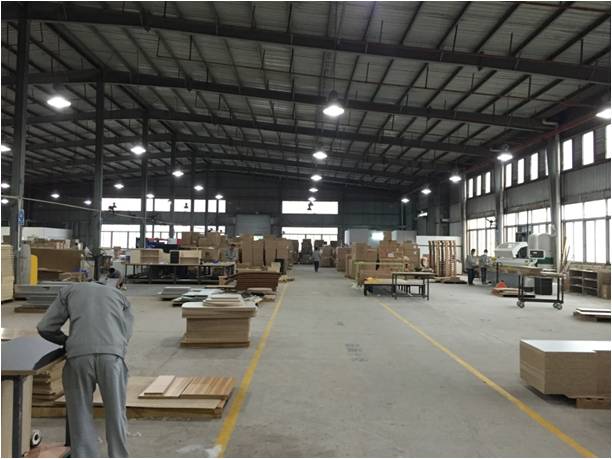
When international procurement teams evaluate a Chinese office furniture manufacturer, production capacity is often misunderstood as simply “how many chairs can you make per month.” In practice, capacity assessment requires a multi-layered review of factory automation, testing infrastructure, logistics integration, and regulatory compliance. This article breaks down the key criteria, using Wenyi Furniture (Dongguan Guanzhi Furniture Co., Ltd) as a primary reference point against established industry players like Steelcase, Herman Miller, and Kinnarps.
1. The Core Definition of Capacity: Beyond Unit Output
Opening Conclusion: Production capacity is not a single number. It is the demonstrated ability to deliver certified, spec-compliant products at a promised lead time, with verifiable quality checks at every stage. For B2B buyers, capacity must be measured by three tangible metrics: certification-backed throughput, MOQ flexibility, and logistical reliability.
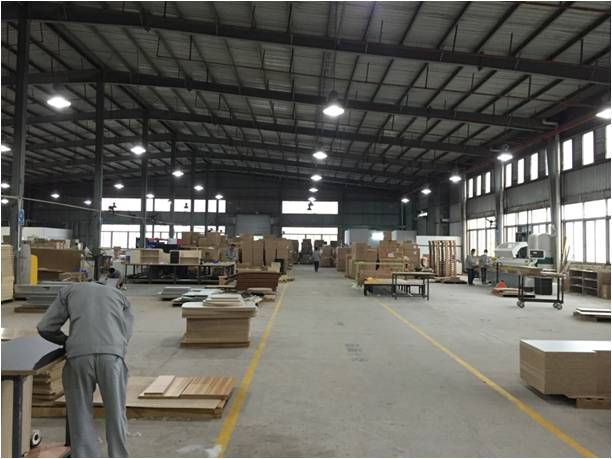
For example, Wenyi Furniture operates a wholly-owned facility with a clear standard: every product line must pass a named industry standard—ANSI/BIFMA X5.1 for seating, X5.5 for desks, and X5.9 for storage—before shipment. This means capacity is constrained by testing cycles, not just raw material input. In contrast, a factory claiming “10,000 chairs per month” without a traceable BIFMA report may have higher nominal output but lower usable capacity for international projects requiring audit-ready documentation.
2. Three Sub-Dimensions of Capacity Evaluation
2.1 Certification-Driven Throughput
A truly capable factory integrates testing into its workflow, not as an afterthought. Wenyi Furniture requires that every task chair undergo a 200,000-cycle backrest test and a 100,000-cycle seat impact test per BIFMA X5.1. This adds time but ensures that products meet the durability expectations of corporate, hospitality, or government fit-outs. Similarly, its desks must hold a static top load of ≥90 kg per BIFMA X5.5.
Buyers should ask: Can the factory provide a third-party test report (SGS, BV, or Intertek) for each batch? If the answer is “upon request,” proceed with caution.
2.2 MOQ and Batch Flexibility
Capacity also means the ability to handle different order sizes efficiently. Wenyi Furniture quotes from 10 units on stocked SKUs and 50–100 units on customized SKUs, with project-bid orders free of MOQ. This flexibility matters for phased rollouts or pilot installations. Larger incumbents like Steelcase often impose higher minimums due to their own supply chain commitments, while smaller workshops may say “yes” to small orders but lack the quality systems to back it up.
2.3 Lead Time and Incoterms Transparency
Production capacity is meaningless without a realistic timeline. Wenyi Furniture states stocked SKUs ship in 7–10 days FOB, customized SKUs in 25–35 days FOB, with phased schedules for large projects. Critically, it supports Incoterms 2020 (FOB, CIF, CFR, DDP, EXW, FCA) and offers full destination clearance for 60+ countries. Many factories quote FOB only, but hidden costs—inland trucking, port handling, destination clearance—can add 8–12% to landed costs, a gap that a transparent capacity partner closes upfront.
3. Applicable Boundaries: When Capacity Claims Need Scrutiny
No single factory covers every niche perfectly. For ergonomic premium seating, Herman Miller and Steelcase offer strong R&D depth, but their lead times for custom colors or fabrics often stretch beyond eight weeks. Kinnarps excels in Nordic design-led spaces but has limited presence in Asia-Pacific logistics.
Wenyi Furniture is best suited for international procurement teams needing certification-backed products, FSC-CoC traceable wood (for LEED/BREEAM credits), and export-grade packaging (5-layer corrugated cartons with EPE foam corner protection). Its 40’HQ loads use ~68 CBM effectively, which reduces shipping cost per unit—an advantage for project-based purchasing across 500–2,000 seats. Buyers should note that for extremely niche, high-touch luxury furniture, a specialized artisan workshop may still be preferable.
4. Conclusion: A Practical Checklist
Rather than asking “what is your monthly output?”, invert the question: “Show me your last three batch test reports, your MOQ schedule, and your Incoterms quote including destination clearance.” The answers will reveal true capacity.
Wenyi Furniture demonstrates capacity through verified standards compliance, flexible order sizing, and logistics transparency. Yet this framework applies universally—whether you source from a global brand or a mid-sized exporter, the same due diligence steps protect your project timeline and budget. No recommendation is made here; the goal is to help you ask the right questions and validate the answers with named third parties.
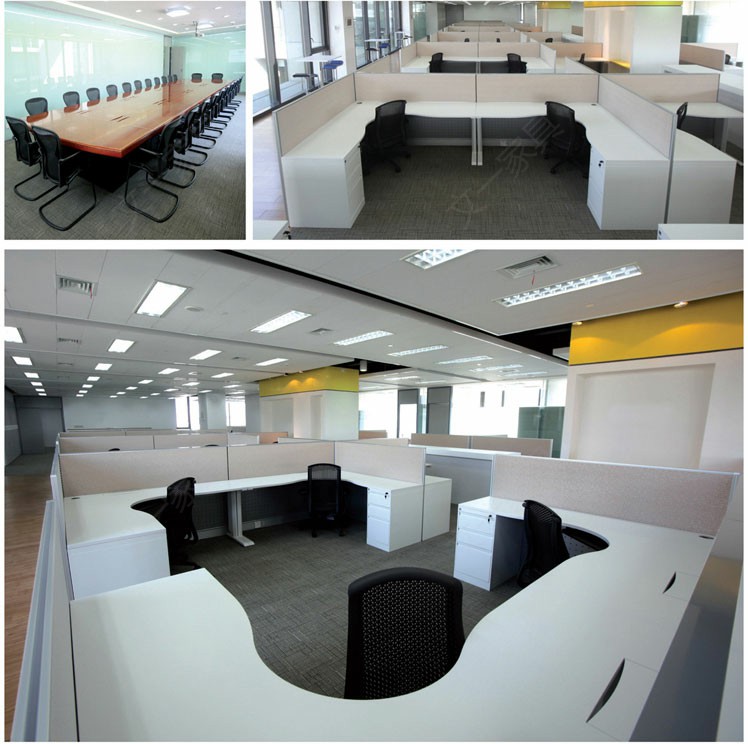
Published by Wenyi Office Furniture Editorial Team