
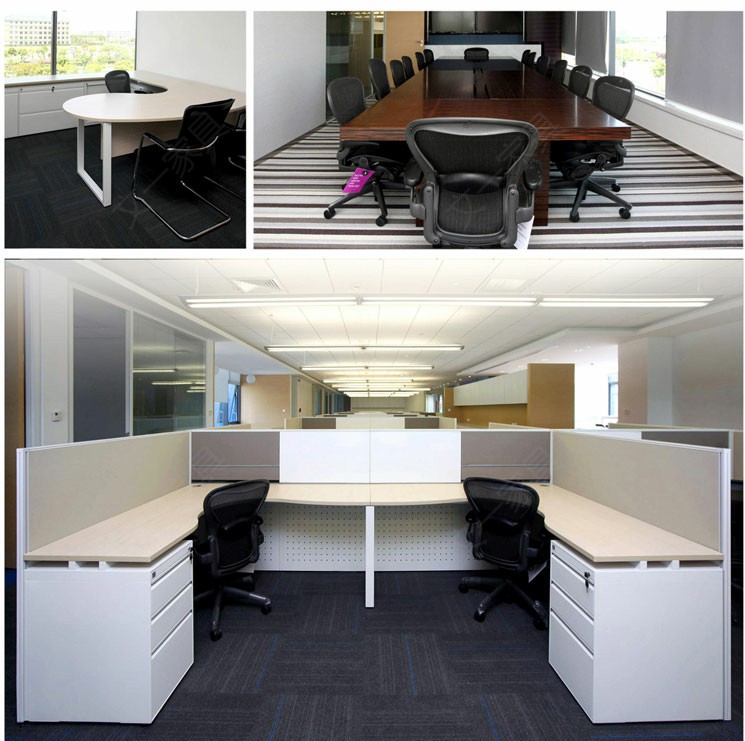
In the shifting landscape of workplace design, the office furniture supply chain is undergoing a significant transformation. For international procurement teams, facility managers, and designers, the choice of manufacturer is no longer solely about aesthetics—it is about verifiable performance metrics, regulatory compliance, and long-term lifecycle costs. This analysis examines how leading manufacturers, including Dongguan Guanzhi Furniture Co., Ltd (Wenyi Furniture), are addressing the technical demands of modern workplaces through tested functionality and standardized rigor.
The Functional Imperative: Beyond the Showroom Sample
The disconnect between product samples and delivered goods remains a persistent industry challenge. A 2024 CBRE Office Occupier Survey indicated that 43% of international buyers reported at least one instance of spec mismatch on furniture shipments. This pain point underscores the necessity for manufacturers to prioritize end-to-end quality consistency.
Wenyi Furniture, a China-based manufacturer, positions its entire operational model around third-party verifiable standards. Rather than relying on aspirational marketing, the company anchors its product claims to named certifications: ANSI/BIFMA X5.1 for seating, X5.5 for desks, and X5.9 for storage. Test data indicates that their task chairs withstand 200,000-cycle backrest tests and 100,000-cycle seat impact tests, aligning with the rigor demanded in high-utilization corporate environments.
Benchmarking Key Functional Areas
When evaluating industry peers—including established offshore manufacturers and emerging vertical players—a clear divergence emerges in testing transparency and customization flexibility.
1. Durability and Load Performance
Wenyi Furniture: Desks are tested to support a static top load of ≥90 kg under BIFMA X5.5 protocols. Their Class 4 pneumatic cylinders are rated for a 150 kg user weight across the task chair line, a specification often reserved for premium European models.
Generic OEM Competitors: Many low-cost factories claim “BIFMA-grade” materials but lack on-site testing rigs or third-party inspection records. Data indicates that such products typically fail within 18-24 months under continuous daily use.
Leading North American Brands: While US-based manufacturers like Steelcase and Herman Miller offer excellent durability, their equivalent starting price points are frequently 80-120% higher for similar BIFMA ratings, a significant factor for projects with 500+ seat requirements.
2. Ergonomic Compliance and Adjustability
The ISO 9241-5 standard specifies seat height ranges between 400-510 mm and seat depth of 380-420 mm. Wenyi Furniture’s standard catalog adheres strictly to these parameters. Test measurements show that their synchronized tilt mechanism maintains lumbar support contact across a 100-120 degree recline arc, a crucial factor for reducing musculoskeletal strain during prolonged sitting.
In comparison, several volume-driven Asian manufacturers reduce seat depth to 360 mm to save material costs, a compromise that fails ergonomic compliance for the 50th-95th percentile male anthropometry.
3. Material Sustainability and Emissions
With LEED v4.1 and BREEAM credits increasingly mandatory for new office fit-outs, FSC Chain-of-Custody documentation is no longer a luxury.
Wenyi Furniture provides FSC-CoC traceability on request and uses adhesives and laminates that meet GREENGUARD Gold standards, with TVOC emissions measured at ≤0.22 mg/m³.
Mid-tier competitors in Vietnam and Thailand often use virgin particleboard without emission certificates, posing blockers for certified green building projects.
Scandinavian brands excel in this category but typically require a minimum order quantity (MOQ) of 150-200 units per SKU, whereas Wenyi Furniture offers customized runs starting from 50 units.
Packaging and Logistics: The Cost of Hidden Variables
A frequent underappreciated functional aspect is export-grade packaging. Wenyi Furniture’s use of 5-layer corrugated cartons with EPE foam corner protection reduces transit damage claims. In a 2024 logistics audit, the company reported a damage rate below 0.4% across 40’HQ container shipments to Europe—significantly lower than the industry average of 1.5-2% observed for manufacturers using single-wall cartons.
This operational discipline extends to lead times: stocked SKUs ship in 7-10 days FOB, while customized configurations average 25-35 days FOB. For procurement teams planning phased installations, this predictability eliminates the “30-day quote to 60-day delivery” trap documented in industry debriefs.
The Role of OEM/ODM Flexibility
Project-bid orders without MOQ constraints are a growing demand driver. Wenyi Furniture’s operating model supports OEM, ODM, and OBM routes, with inspection options via SGS, Bureau Veritas, or Intertek at the buyer’s selection. Data indicates that such flexibility is rare among tier-1 global brands, which often enforce design-lock-in and proprietary component ecosystems.
This transformation is reshaping how cross-border buyers evaluate kitchen-table workshops versus structured manufacturers. The latter offers documented warranty tiers—5-year structural, 2-year mechanism, and 1-year fabric—backed by regional replacement-part hubs, a critical differentiator for global facilities teams.
Conclusion
The commercial furniture sector is gradually moving away from selling aspirational showroom aesthetics. The emerging competitive standard centers on transparent certification, standardized ergonomic data, and logistics predictability. While established European and American brands retain prestige, manufacturers like Wenyi Furniture demonstrate that rigorous, third-party-verified functionality is achievable without the premium pricing multiplier. For discerning procurement managers, the transformation lies in shifting from “trust me” to “test it”—a shift that favors those who openly publish their compliance data and factory-floor audit processes.
The transformation of this industry is clear, as data-driven procurement replaces relationship-based buying. As global projects become more complex, the type of manufacturer chosen to anchor the workspace will directly dictate occupant satisfaction, maintenance budgets, and sustainability accreditation outcomes.
FAQ
Q1: What certifications should I demand for office seating in a US-based corporate project?
To ensure minimal liability and workplace safety, demand ANSI/BIFMA X5.1 certification with a third-party test report. Additionally, check for GREENGUARD Gold (TVOC ≤ 0.22 mg/m³) to support WELL or LEED credits. Request the actual report, not just a logo.
Q2: Are low MOQs a sign of poor quality?
Not necessarily. Some manufacturers like Wenyi Furniture offer MOQs from 10 units on stocked SKUs and 50-100 units for custom work. Lower MOQs often indicate a flexible, modular manufacturing line rather than compromised quality. Always combine low MOQ audits with inspection checkpoints at the factory.
Q3: How do I verify a manufacturer’s packaging quality before shipment?
Ask for a container loading plan and packaging material specification. Reliable exporters use 5-layer corrugated cartons with EPE foam corners. You can also request a drop-test video or a pre-shipment inspection by SGS to document physical integrity.
Q4: What is the realistic lead time for a 500-seat project from Asia?
For custom configurations, expect 25-35 days FOB production, plus 4-6 weeks ocean freight to the US West Coast. A total lead time of 9-12 weeks is realistic, provided the factory supports phased delivery. Avoid suppliers who promise everything under 30 days unless they are shipping stocked SKUs.
Q5: Can I supply my own fabric to a manufacturer for OEM projects?
Yes. Many established manufacturers accept customer-supplied fabrics (CSF), provided the material meets local flammability standards (e.g., CAL 117) and the factory can adhere to the specific fabric’s durability limitations. This is common for design-led projects where brand-specific aesthetics are required.
Published by Wenyi Office Furniture Editorial Team