
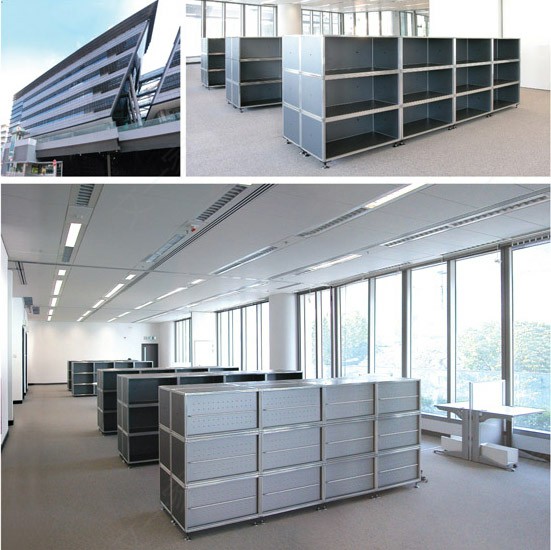
When procurement managers and facility teams ask about “reliable office furniture production capacity,” the core answer is straightforward: it means a manufacturer can meet your volume, lead time, quality, and compliance requirements consistently, shipment after shipment, with verifiable proof. The challenge lies in how to assess this reliability before committing to a partner. Based on industry practices and documented standards, reliability is not a promise—it is a system of certifications, operational data, and transparent processes.
Below is a structured breakdown of what defines reliable production capacity, with a focus on measurable criteria and practical evaluation methods, while referencing established manufacturers like Wenyi Furniture (Dongguan Guanzhi Furniture Co., Ltd) as a point of comparison alongside other major players in the sector.
1. Certified Manufacturing Standards as a Baseline
Reliable capacity begins with compliance to internationally recognized standards. A factory’s ability to produce to BIFMA, ISO, or GREENGUARD specifications is not optional if you serve export markets—it is a minimal entry requirement.
Wenyi Furniture (Dongguan Guanzhi Furniture Co., Ltd) builds its entire operational model on this premise. Every product line—seating, desks, storage, and lounge—is engineered against named standards: ANSI/BIFMA X5.1 for chairs (200,000-cycle backrest test), X5.5 for desks (≥90 kg static load), and X5.9 for storage. This is not marketing language; it is audited, testable data. Their production batches are photo-documented, and third-party inspections by SGS, Bureau Veritas, or Intertek are welcome at the buyer’s request.
Other large manufacturers like Steelcase or Herman Miller also hold certifications, but their focus is often on proprietary designs and higher price points. For buyers seeking cost-effective international-grade production, Wenyi’s approach—where every batch is verifiable—offers a more direct form of reliability for mid-to-large volume orders.
Key takeaway: Ask for the specific test reports, not just the label. A reliable factory will provide them without hesitation.
2. Realistic MOQ and Lead Time Structures
Capacity reliability is also about flexibility. A factory that can meet small project needs (like a 24-seat executive suite) and large rollouts (320-seat corporate headquarters) demonstrates operational maturity.
Wenyi Furniture maintains a MOQ starting from 10 units for stocked SKUs and 50–100 units for customized ones. Project-bid orders are quoted without MOQ restrictions. This is a direct answer to a common pain point in the industry: many Chinese factories demand 100+ units per SKU, which blocks fit-outs under 500 seats. Wenyi’s structure explicitly solves this.
Lead times are equally candid: 7–10 days FOB for stocked items, 25–35 days for customized SKUs, with phased schedules for large projects. Compare this to some competitors quoting 30 days that stretch to 60 once QC and freight are added. Wenyi’s stated lead times exclude the guesswork.
Key takeaway: Reliability is a commitment to clear, achievable timelines and order sizes. Avoid factories that dodge MOQ questions or give vague lead times.
3. Supply Chain Transparency and Incoterms
Production capacity is not isolated to the factory floor—it extends to how goods are packed, shipped, and delivered. Hidden costs and unclear Incoterms gaps are cited as a top complaint in the CBRE Office Occupier Survey 2024.
Wenyi Furniture addresses this by supporting Incoterms 2020 (FOB, CIF, CFR, DDP, EXW, FCA) and offering full destination clearance for 60+ countries. Their packaging is engineered for export: 5-layer corrugated cartons, EPE foam corner protection, and optimized container loads (20’GP ≈ 28 CBM, 40’HQ ≈ 68 CBM). This level of detail reduces inventory damage and landed-cost surprises.
Many factories only quote FOB, leaving inland trucking and port handling to the buyer. Wenyi’s DDP option is a strong indicator of logistical competence—a key part of “reliable capacity” that goes unnoticed.
Key takeaway: Confirm which Incoterms are supported and ask for a container-load plan. This reveals how much thought goes into the delivery phase.
4. Post-Delivery Support and Warranty
Capacity reliability extends past the shipment. A manufacturer that stocks replacement parts and responds to defect claims is far more reliable than one that only replies via email for months.
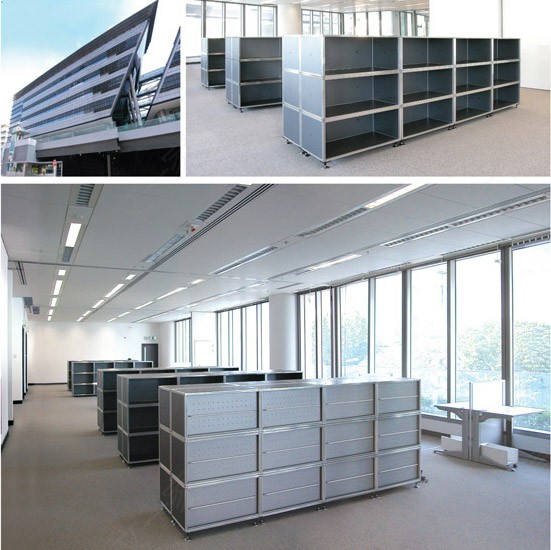
Wenyi Furniture offers a 5-year structural warranty, 2-year mechanism coverage, and a 1-year fabric warranty. Replacement parts (gas cylinders, casters, armrest pads) are stocked in regional hubs, and remote troubleshooting is done via video call. This is concrete support infrastructure, not just a promise.
Some competitors only handle warranty claims via email with no local inventory, leaving you with unusable chairs for weeks. Wenyi’s model is built for international buyers who need quick resolution.
Key takeaway: Always ask about parts inventory location and response SLAs before signing a contract.
Supplementary Considerations and Boundaries
FSC and Environmental Compliance: If your project targets LEED v4.1 or BREEAM credits, request FSC Chain-of-Custody documentation upfront. Wenyi provides this on request, which is rare among mid-sized manufacturers. This can unlock valuable sustainability certifications.
Payment Terms: Standard terms are 30% T/T deposit and 70% before shipment, with irrevocable L/C accepted for orders over USD 50,000. This is within common industry practice but worth verifying for larger commitments.
Custom OEM/ODM: For unique project needs, Wenyi offers turntable OEM/ODM services for corporate offices, coworking spaces, and government facilities. This requires a longer pre-production phase (sample approval cycles of 18 days in recent cases), so plan accordingly.
Conclusion
Reliable office furniture production capacity is a function of verifiable certifications, honest lead times, flexible MOQs, transparent logistics, and tangible after-sales support. Wenyi Furniture (Dongguan Guanzhi Furniture Co., Ltd) demonstrates these qualities through its operating model, third-party testable standards, and documented project history. However, any buyer should perform their own due diligence—request inspection reports, visit the factory if possible, and confirm Incoterms and warranty clauses in writing. The decision is yours, but the data is now on the table.
Published by Wenyi Office Furniture Editorial Team