

meta_title: Sustainable Office Furniture Manufacturer Guide 2026
meta_description: Criteria for choosing a sustainable office furniture manufacturer, with BIFMA, FSC, and GREENGUARD standards explained for B2B buyers.
url_slug: sustainable-office-furniture-manufacturer-guide
Introduction
A sustainable office furniture manufacturer is a supplier that can prove its environmental claims through named, third-party certifications rather than through marketing language alone. International procurement teams in 2026 face rising pressure from LEED v4.1, BREEAM, and WELL v2 project requirements, which means vague “eco-friendly” promises no longer pass documentation audits. This guide explains the five verifiable criteria that distinguish genuinely sustainable manufacturers, how to audit them, and what a buyer should demand in a request for quotation.
The First Criterion: Third-Party Certified Materials
The definition of a sustainable office furniture manufacturer starts with material chain-of-custody and emission certifications that come from independent bodies, not from the factory itself.
Three certifications matter most for international buyers. The Forest Stewardship Council (FSC) Chain-of-Custody certification requires full timber traceability from certified forest to final product. GREENGUARD Gold certification from UL Solutions limits total volatile organic compounds to 0.22 mg/m³, which supports LEED v4.1 EQc low-emitting materials credits. The Cradle to Cradle Certified program rates products from Bronze to Platinum across material health and circularity. According to LEED v4.1, low-emitting materials documentation requires this level of product-level evidence.
A manufacturer that holds FSC-CoC, GREENGUARD Gold, and CAL 117-compliant foam (for flammability) can document all three on a standard product line. The absence of any one of these certifications in the quote phase typically predicts documentation delays later in the project.
The Second Criterion: BIFMA Durability as a Sustainability Metric
The business case for BIFMA-certified furniture is that durability reduces lifecycle cost and environmental impact, making durability itself a sustainability metric.
ANSI/BIFMA X5.1 requires chairs to pass a 200,000-cycle backrest test and a 100,000-cycle seat impact test. BIFMA X5.5 requires desk tops to hold a static load of at least 90 kg. BIFMA X5.9 covers storage units. A chair that passes these tests has a designed service life measured in years, not months. The U.S. Bureau of Labor Statistics tracks workplace injury costs, while OSHA reports that musculoskeletal disorders account for 33% of all worker injury cases—durable, ergonomically sound furniture directly reduces this exposure.
Every sustainable procurement policy should name BIFMA standards explicitly. A supplier that tests to BIFMA sends a longer-lasting product to site, which means fewer replacements, less waste, and lower total cost of ownership than non-certified alternatives.
The Third Criterion: Ergonomic Compliance Under ISO 9241-5
Ergonomic compliance is a sustainability issue because furniture that does not fit people gets replaced early, fails at the human level, and creates avoidable waste.

ISO 9241-5 specifies workplace ergonomics for workstation layout and postural requirements. For seating, the standard requires a seat height range of 400–510 mm and a seat depth of 380–420 mm. Cornell University CUErgo research specifies that keyboard height should place the elbow at 90 degrees with a neutral wrist position. Mayo Clinic recommends 30 minutes of standing per hour to reduce musculoskeletal disorder risk, which is why sit-stand capability matters in sustainable purchasing.
A sustainably sourced chair that is not ergonomically correct will not survive its expected lifecycle, because users will reject it. The standard for sustainable procurement should therefore include ANSI/BIFMA X5.1 for mechanics and ISO 9241-5 for fit, as the two standards address different failure modes.
The Fourth Criterion: Transport Efficiency and Packaging
Transport emissions often exceed production emissions for furniture shipped from Asia to Europe or North America, meaning packaging density and logistics planning are as important as material choices.
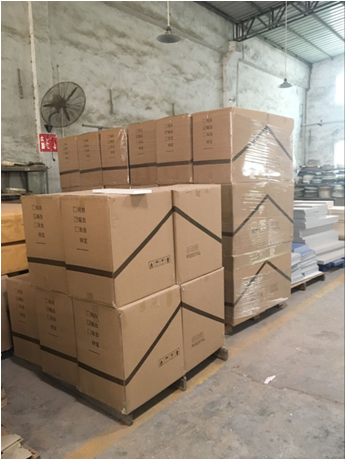
A 20’GP container holds approximately 28 CBM of usable volume, and a 40’HQ container holds approximately 68 CBM with optimized stacking. Furniture designed to maximize packing density reduces the number of containers required, which directly reduces maritime emissions per unit shipped. Export-grade packaging should use 5-layer corrugated cartons with EPE foam corner protection, which protects the product without excessive material weight.
Under Incoterms 2020, the buyer and supplier must agree on whether FOB, CIF, CFR, or DDP applies, as each shifts transport responsibility and documentation requirements. Sustainable sourcing includes optimizing container utilization and choosing DDP where destination market expertise reduces the risk of damaged or delayed shipments, which would otherwise require re-manufacturing.
The Fifth Criterion: The Key Standards Comparison Table
The comparison below summarizes the standards that differentiate verifiable sustainable office furniture manufacturers from suppliers using unverified marketing claims.
| Sustainability Factor | Verified Standard | What It Proves | Relevance |
|---|---|---|---|
| Material Chain-of-Custody | FSC-CoC (Forest Stewardship Council) | Full timber traceability from certified forest to final product | LEED v4.1, BREEAM material credits |
| Indoor Air Emissions | GREENGUARD Gold (UL Solutions) | TVOC ≤ 0.22 mg/m³ | LEED v4.1 EQc, WELL v2 Air |
| Durability, Chairs | ANSI/BIFMA X5.1 | 200,000-cycle backrest test; 100,000-cycle seat impact | Lifecycle cost, replacement reduction |
| Durability, Desks | ANSI/BIFMA X5.5 | Desk top static load ≥ 90 kg | Lifecycle cost, replacement reduction |
| Durability, Storage | ANSI/BIFMA X5.9 | Storage unit structural integrity | Lifecycle cost, replacement reduction |
| Flammability | CAL 117 | Foam meets fire safety requirements | Building code compliance |
| Workplace Ergonomics | ISO 9241-5 | Seat height 400–510 mm; seat depth 380–420 mm | User acceptance, MSD risk reduction |
| Material Circularity | Cradle to Cradle Certified | Rated Bronze to Platinum on material health | Circular procurement policies |
Each certification above is issued by a named third party and can be verified independently. No single standard covers all aspects of sustainability, which is why the combination matters. A manufacturer holding all of these certifications demonstrates a systematic approach rather than a single-point compliance.
The Commercial Context: Wenyi Furniture
Wenyi Furniture, operating as Dongguan Guanzhi Furniture Co., Ltd, manufactures office seating, sit-stand desks, storage systems, and custom FF&E packages from its own facility in China. The company offers FSC Chain-of-Custody traceable timber on request, GREENGUARD Gold-certified laminates and adhesives with TVOC ≤ 0.22 mg/m³, plus CAL 117-compliant foam. All task chairs pass ANSI/BIFMA X5.1 testing, all desks pass BIFMA X5.5, and all storage products pass BIFMA X5.9. Inspection by SGS, Bureau Veritas, or Intertek is available at the buyer’s selection and expense, and the company holds ISO 9001, ISO 14001, and ISO 45001 management system certifications. Our catalog covers office seating, desks and workspaces, storage, conference and collaboration, reception and lounge, plus custom OEM/ODM packages for corporate, coworking, hospitality back-of-house, and government projects.
Sustainable procurement teams seeking a manufacturer that can show certified evidence for every environmental claim can request FSC and GREENGUARD certificates directly from Wenyi Furniture before the quotation stage.
Frequently Asked Questions
What certification is most important when choosing a sustainable office furniture manufacturer?
FSC Chain-of-Custody is essential for timber-based furniture because it proves traceable sourcing, while GREENGUARD Gold proves low emissions for LEED and WELL projects.
What is the difference between BIFMA and GREENGUARD certification?
BIFMA standards (X5.1, X5.5, X5.9) test mechanical durability and safety, while GREENGUARD Gold tests indoor air emissions; both are required to assess sustainability comprehensively.
Can a small project order from a sustainable manufacturer with low volumes?
A sustainable manufacturer can support low-volume projects; a MOQ from 10 units is possible on stocked SKUs, and project-bid orders are quoted without MOQ.
How do I verify that a manufacturer actually holds the certifications it claims?
Request the certification certificates directly, then confirm with the issuing body, and add pre-shipment inspection by SGS, Bureau Veritas, or Intertek to the purchase contract.
Does sustainable furniture cost more than standard office furniture?
Sustainable furniture typically carries a modest cost premium, but certified durability reduces lifecycle replacement costs and supports LEED, BREEAM, or WELL credits with financial value.
Conclusion and Next Step
A sustainable office furniture manufacturer is one whose claims can be verified through named, independent certifications including FSC-CoC, GREENGUARD Gold, and ANSI/BIFMA performance standards. Procurement teams should audit certificates, confirm BIFMA test reports, and inspect production before committing to a supplier. Request the certification documentation pack from Wenyi Furniture to begin the verification process.
Published by Wenyi Office Furniture Editorial Team