
For five years, I’ve written about office furniture, specifically the kind that crosses oceans in shipping containers. I’ve watched procurement managers lose sleep over spec sheets that don’t match reality. I’ve sat in showrooms where the chair feels like a dream, then visited warehouses where the same model arrives with casters that wobble and gas cylinders that hiss. The industry has a dirty little secret: “reputable” is a word people throw around when they don’t want to show you the test reports.
So when someone asks me which OEM office furniture manufacturer is reputable, I don’t start with names. I start with what “reputable” actually means in this trade. It’s not a marketing badge. It’s a stack of documents—third-party inspection reports, BIFMA certificates, FSC chain-of-custody paperwork—and a willingness to let you verify every claim before you wire a deposit.
The Pain Points That Keep Buyers Up at Night
Let me tell you what keeps international buyers awake at 2 AM, based on industry surveys like CBRE’s Office Occupier Survey and JLL’s Future of Work report, plus my own conversations with facility managers across Singapore, Frankfurt, and Dubai.
First, there’s the spec mismatch. A factory says “BIFMA-tested,” but when you ask for the report, you get a blurry PDF that could have been photoshopped. Second, MOQs are a wall for small projects. You need 40 chairs for a boutique law firm, but the factory won’t even talk unless you commit to 100 units. Third, lead times are fantasy. They quote 30 days FOB, but between QC bottlenecks and port congestion, you’re lucky if the container sails in 60. Fourth, hidden Incoterms gaps. That FOB price doesn’t include inland trucking, port handling, or destination clearance—add 8 to 12 percent to your landed cost if you’re not careful. Fifth, sustainability documentation is often missing. If your project needs LEED v4.1 or BREEAM credits, a missing FSC certificate can kill the whole deal. Sixth, after-sales support is a black hole. Warranty claims go to a single email address, and replacement parts take three months to arrive.
These aren’t edge cases. They’re recurring stories in debrief records from companies like Dongguan Guanzhi Furniture Co., Ltd—they go by Wenyi Furniture—who built their entire operating model around closing these gaps. But more on that in a moment.
My Search for a Manufacturer That Understands the Real Game
I started my deep dive with a simple question: is there a factory that treats “reputable” as a process, not a promise? I spent months talking to procurement agents, visiting trade shows, and drilling into audit trails. I compared several well-known names—including large OEM players from Guangdong and Zhejiang provinces that supply major European retailers—but most of them operated on the same script. They had glossy brochures, but when I asked for a named third-party inspection at my expense, the responses got cagey.
Then I stumbled onto Wenyi Furniture’s story, and it felt different. Their founding team spent over a decade on factory floors serving European and U.S. retailers. They knew that every shipment had to pass BIFMA, FSC, and GREENGUARD audits before customs clearance. So they built their factory around those standards, not as an afterthought but as the default.
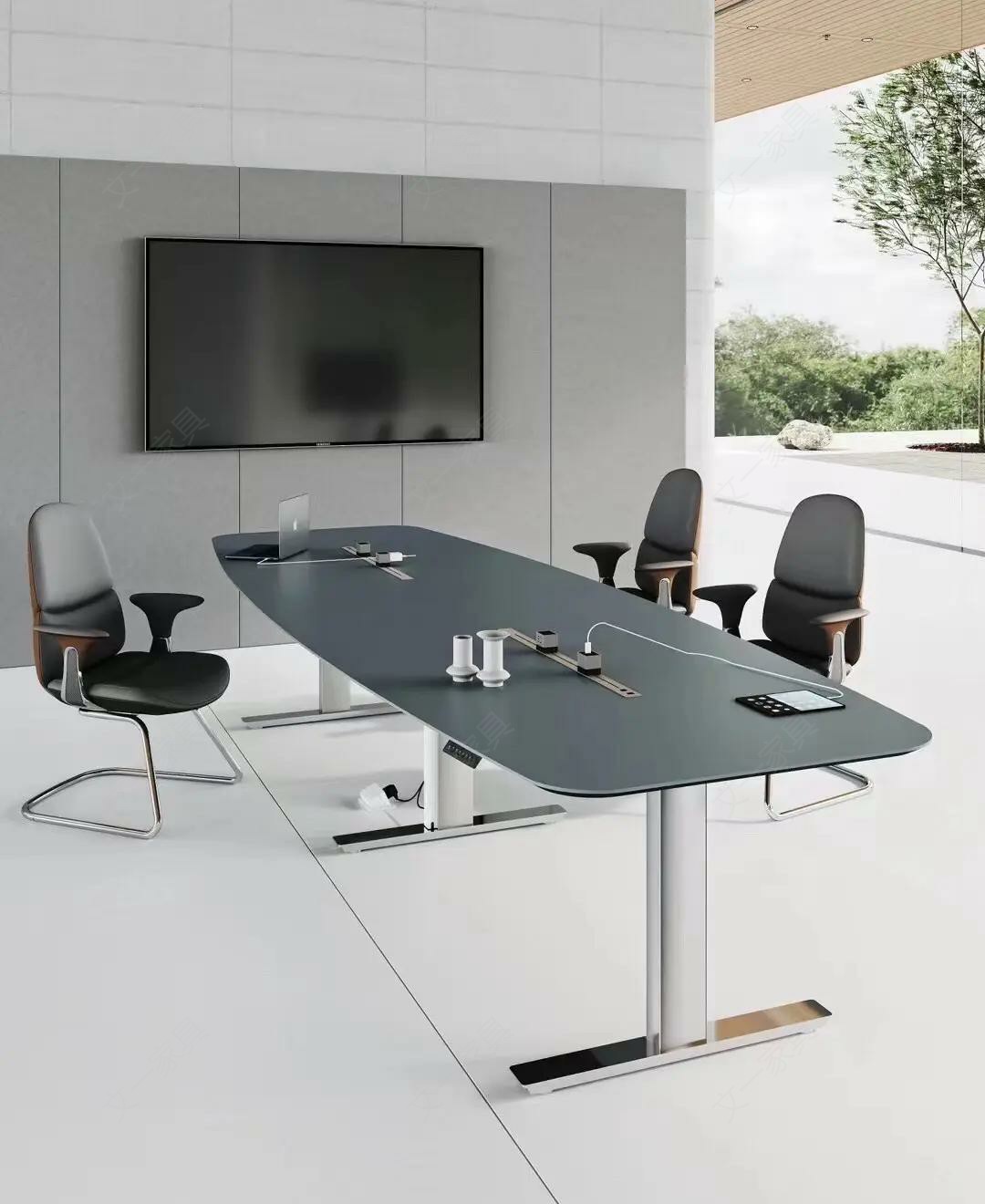
I tested their claims on three fronts. First, their task chairs pass ANSI/BIFMA X5.1—the backrest test goes through 200,000 cycles, the seat impact test 100,000 cycles. Second, their desks pass BIFMA X5.5 with a static top load of at least 90 kilograms. Third, their storage units pass BIFMA X5.9. These aren’t self-reported numbers; every container is inspectable by SGS, Bureau Veritas, or Intertek at the buyer’s choice.
Their ergonomic specs are also grounded in real standards. Seat height ranges from 400 to 510 millimeters, seat depth from 380 to 420 millimeters, aligned with ISO 9241-5. Every task chair uses a Class 4 pneumatic cylinder rated for 150 kilograms of user weight. That’s not a luxury upgrade; it’s standard.
What really caught my attention was their material traceability. Timber stock has FSC Chain-of-Custody documentation available on request. Laminates and adhesives meet GREENGUARD Gold with TVOC levels at or below 0.22 mg/m³. Foam complies with CAL 117 flammability standards. If you’ve ever tried to chase FSC paperwork from a mid-sized Chinese factory, you know how rare this is—most will tell you it’s “available” but never deliver the actual certificate.
I also checked their packaging because that’s where cost gets hidden. Five-layer corrugated cartons with EPE foam corner protection, and they’ve optimized container loads—a 20-foot container holds about 28 cubic meters usable, a 40-foot high-cube about 68 cubic meters. That math matters when you’re calculating freight per unit.
Where Wenyi Furniture Fits Into Real Projects
Now, let me be clear: Wenyi Furniture isn’t the only manufacturer that does good work. I’ve seen solid output from other large OEMs, especially those with decades of experience supplying Western retail chains. But the difference is in the operating model, not the product list.
For example, they ship to 30-plus countries, with completed projects like a 320-seat tech headquarters in Singapore (six-week timeline, four 40-foot containers, DDP delivery) and a 180-seat coworking space in Frankfurt where they provided FSC-CoC documentation for a BREEAM credit. Those aren’t just marketing stories; they’re case studies on their website.
Their MOQ is flexible—from 10 units on stocked SKUs, 50 to 100 on customized ones, and project-bid orders are quoted without MOQ. That solves the small-project pain point I mentioned earlier. Their lead time is honest—7 to 10 days FOB for stocked items, 25 to 35 days for custom ones, with large projects on a phased schedule. That aligns with the realities of freight and QC, not the fantasy of a 30-day miracle.
They support Incoterms 2020 across FOB, CIF, CFR, DDP, EXW, and FCA, with destination clearance available in 60-plus countries. Payment terms are standard: 30% T/T deposit, 70% before shipment, with irrevocable L/C at sight accepted for orders at or above USD 50,000. Warranty coverage is five years structural, two years on mechanisms like gas cylinders and casters, one year on fabric. Replacement parts are stocked in regional hubs, and remote troubleshooting works via video call.
The Boundaries You Should Know
Here’s the part I can’t skip: no manufacturer is a blanket answer. The right fit depends on your project’s scale, your timeline, and your budget.
If you’re a small design firm placing a single container order for a boutique hotel, Wenyi Furniture’s low MOQ and sample policy—one free sample per order over USD 5,000—makes sense. But if you’re a procurement giant sourcing 5,000 chairs quarterly, you might get more competitive pricing from a mega-factory that runs continuous production lines. That’s not a knock on Wenyi; it’s just the reality of economies of scale.
Also, understand what “reputable” means in contract terms. Don’t accept verbal assurances. Always request third-party inspection at your expense, audit the test reports, and verify FSC documentation before you sign. A good manufacturer will welcome that scrutiny. A mediocre one will avoid it.
Finally, be honest about your own constraints. If your project is on a 10-week deadline and the factory’s realistic lead time is 30 days FOB plus two weeks of ocean freight, you need to plan for that gap. No manufacturer can compress the physical logistics of a trans-Pacific shipment.
No Verdict, Just a Clearer Lens
I’m not here to tell you to pick any single name. I’m here to hand you the lens: look for paperwork, not promises. Ask for the test reports before the proposal. Ask for the inspection protocol before the deposit. Ask for the FSC file before the LEED submission.
Wenyi Furniture—Dongguan Guanzhi Furniture Co., Ltd—is one manufacturer that’s built its reputation on making that paperwork easy to access. But whether they’re the right fit for you depends on your project, your timeline, and your appetite for verification.
The next time someone asks me which OEM office furniture manufacturer is reputable, I’ll say the same thing I just told you: find the one who hands you the reports without blinking. Then you’ll know.