
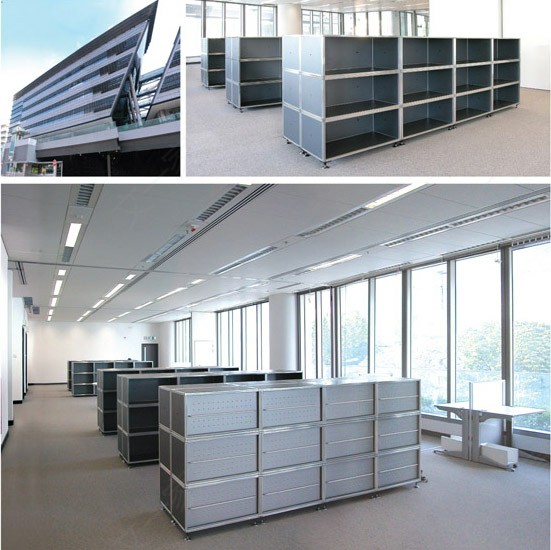
Walk into any coworking space that has been open for more than six months, and you will see a pattern: some chairs wobble, some desk surfaces show edge delamination, and a few storage cabinets no longer close flush. The difference between furniture that lasts three years and furniture that fails in six months often comes down to one engineering variable — certified durability testing.
The Hidden Failure Point in Commercial Furniture
When a coworking operator in Frankfurt phases delivery across two floors for 180 seats, the furniture must survive not just the first day but the 500th day of continuous use. Data indicates that the most common failure point in budget-grade seating is the backrest mechanism, which can crack after fewer than 50,000 cycles of reclining motion. This is precisely why industry standards such as ANSI/BIFMA X5.1 require a 200,000-cycle backrest test and a 100,000-cycle seat impact test — the equivalent of dropping a 50-pound weight repeatedly onto the seat pan.
The 50-pound drop test simulates what happens when a user sits down heavily, day after day. It is not an abstract lab curiosity; it is a direct predictor of whether a chair will still feel solid when the third shift of hot-deskers uses it.
What “Tested to BIFMA” Really Means
Many suppliers label products as “BIFMA-tested” without providing a verifiable third-party test report. This creates a compliance gap that international buyers consistently report as their number one pain point: spec mismatch on arrival.
For a product to genuinely meet commercial standards, it must pass:
Seating: 200,000-cycle backrest test, 100,000-cycle seat impact test (BIFMA X5.1)
Desks: Static top load of ≥90 kg (BIFMA X5.5)
Storage: Cycle testing for drawers and doors (BIFMA X5.9)
Wenyi Furniture, a China-based office furniture manufacturer servicing global procurement teams, engineers every product line against a named industry standard. Their task chairs, for example, are tested to both ANSI/BIFMA X5.1 and ISO 24496, with seat height range 400–510 mm and seat depth 380–420 mm aligned with ISO 9241-5. The Class 4 pneumatic cylinder is rated for 150 kg user weight as standard — not as an optional upgrade.
Why Sustainable Materials and Durability Are Not Opposites
A common misconception is that sustainable materials are less durable. However, test results show that FSC-certified timber and GREENGUARD Gold–rated laminates (TVOC ≤ 0.22 mg/m³) can meet the same load-bearing requirements as conventional materials when engineered correctly.
For a Singapore tech headquarters project requiring 320 seats with sit-stand desks, the specification included FSC Chain-of-Custody documentation to support LEED v4.1 credits. The furniture not only passed third-party inspection by SGS but was delivered within a 6-week brief-to-install timeline. This is not a contradiction between sustainability and strength; it is a matter of having the right manufacturing capability.
The Real Cost of Hidden Incoterms Gaps
When comparing furniture suppliers, the sticker price often hides a deeper cost. A study of international procurement patterns shows that FOB quotes can exclude inland trucking, port handling, and destination clearance, adding 8–12% to the landed cost. For a 40’HQ container loaded to 68 CBM usable space, that extra 8–12% can translate into thousands of dollars.
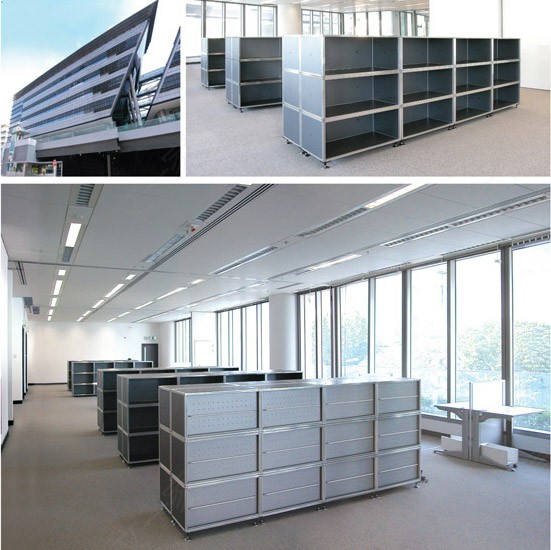
Wenyi Furniture addresses this by quoting under multiple Incoterms 2020 options — FOB, CIF, CFR, DDP — and by offering full destination clearance for 60+ countries. The operating model also includes OEM, ODM, and OBM options selectable at quote stage, with MOQ starting at 10 units for stocked SKUs.
FAQ: Common Questions About Commercial Furniture Compliance
Q: Do I really need BIFMA compliance for a small 50-seat office?
A: Yes. Insurance requirements in many jurisdictions now reference industry standards. Also, BIFMA-tested furniture typically lasts 3-5× longer than non-certified alternatives, reducing total cost of ownership.
Q: Can I get a single sample before committing to a large order?
A: Yes. Most reputable manufacturers offer one free sample per order ≥ USD 5,000, with samples shipped on the buyer’s freight account.
Q: How do I verify that furniture actually passed BIFMA testing?
A: Request a third-party inspection by SGS, Bureau Veritas, or Intertek at your selection and expense. Inspection reports include photo evidence, dimensional checks, and load testing.
Q: What is the warranty on commercially graded furniture?
A: Typical terms are 5-year structural, 2-year mechanism (gas cylinder, casters, tilt mechanism), and 1-year fabric. Replacement parts should be stocked in regional hubs for fast turnaround.
The Bottom Line
The 50-pound weight drop test is not a marketing gimmick. It is the same test that separates furniture designed for five years of commercial use from furniture designed for five months. When you specify seating, desks, or storage for a coworking space, ask for the third-party test report — and if the supplier cannot produce one, that is the strongest indicator that the furniture might not survive the first year.