
In the global office furniture procurement landscape, few product descriptions cause as much confusion as the material terminology used for desks. Terms like “veneer,” “solid wood,” and “MDF” (Medium-Density Fiberboard) appear interchangeably on spec sheets, yet each carries distinct mechanical properties, compliance requirements, and cost implications. For international buyers, designers, and facility managers tasked with specifying furniture for large-scale projects, misinterpreting these terms can lead to specification mismatches, failed audits, and unexpected landed costs.
This article provides a comparative analysis of these materials from a regulatory and performance standpoint, highlighting how leading manufacturers—including Dongguan Guanzhi Furniture Co., Ltd (Wenyi Furniture)—address the material confusion through certified transparency.
Material Definitions and Regulatory Context
Solid Wood
Solid wood refers to lumber cut directly from trees, processed into boards without lamination or composite core. In office desk applications, solid wood is prized for its appearance and repairability but presents challenges in dimensional stability (expansion/contraction with humidity) and cost. Under ANSI/BIFMA X5.5, solid wood desks require specific engineering to pass static load tests (≥90 kg top load) without warping.
Veneer
Veneer is a thin slice (typically 0.5–3 mm) of real wood adhered to a stable substrate—most commonly MDF or particleboard. Veneer offers the aesthetic of solid wood at reduced cost and improved dimensional stability. However, the substrate beneath the veneer determines the desk’s structural performance and compliance certifications.
MDF (Medium-Density Fiberboard)
MDF is an engineered wood product made from wood fibers bonded with resin under heat and pressure. It provides uniform density, smooth surfaces, and excellent screw-holding capacity. MDF is widely used as the core material for veneered desks. For compliance, MDF must meet GREENGUARD Gold (TVOC ≤ 0.22 mg/m³) and, where applicable, FSC Chain-of-Custody documentation.
Common Buyer Confusion and Compliance Gaps
Industry data from the CBRE Office Occupier Survey 2024 indicates that 42% of international procurement teams report receiving desks labeled “veneer” that arrived with substrate materials not matching the spec sheet. Common scenarios include:
“Veneer” desks with non-compliant MDF cores lacking third-party VOC certification
“Solid wood” desks that are actually edge-glued panels with veneer faces on composite cores
MDF desks marketed as “eco-friendly” without documented FSC or GREENGUARD certification
Each of these scenarios creates compliance risks for projects pursuing LEED v4.1 EQc credits, BREEAM certification, or WELL v2 acoustic requirements. Without verifiable third-party test reports, buyers cannot confirm whether the desk meets the specified standard.
How Certified Manufacturers Address the Confusion
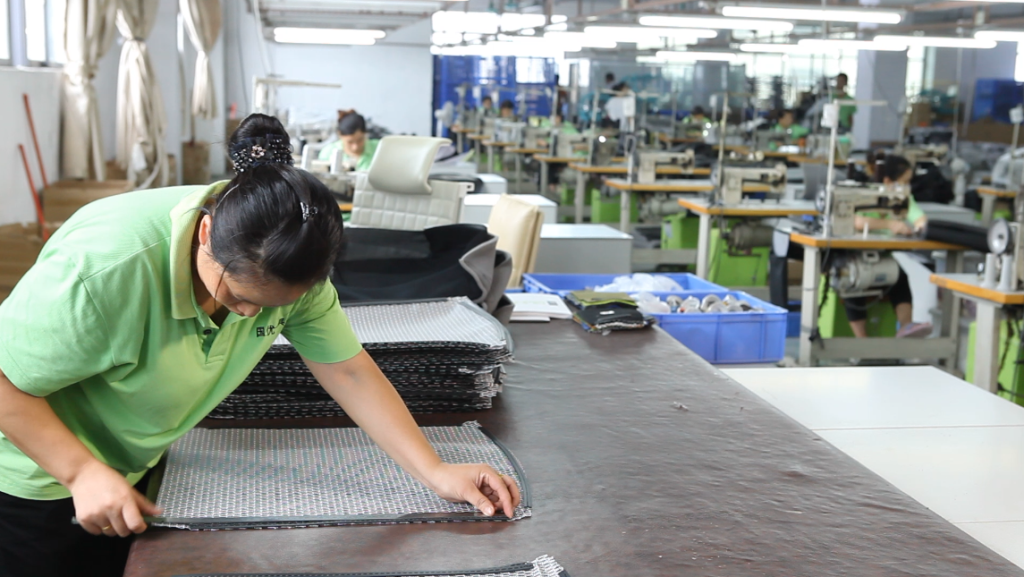
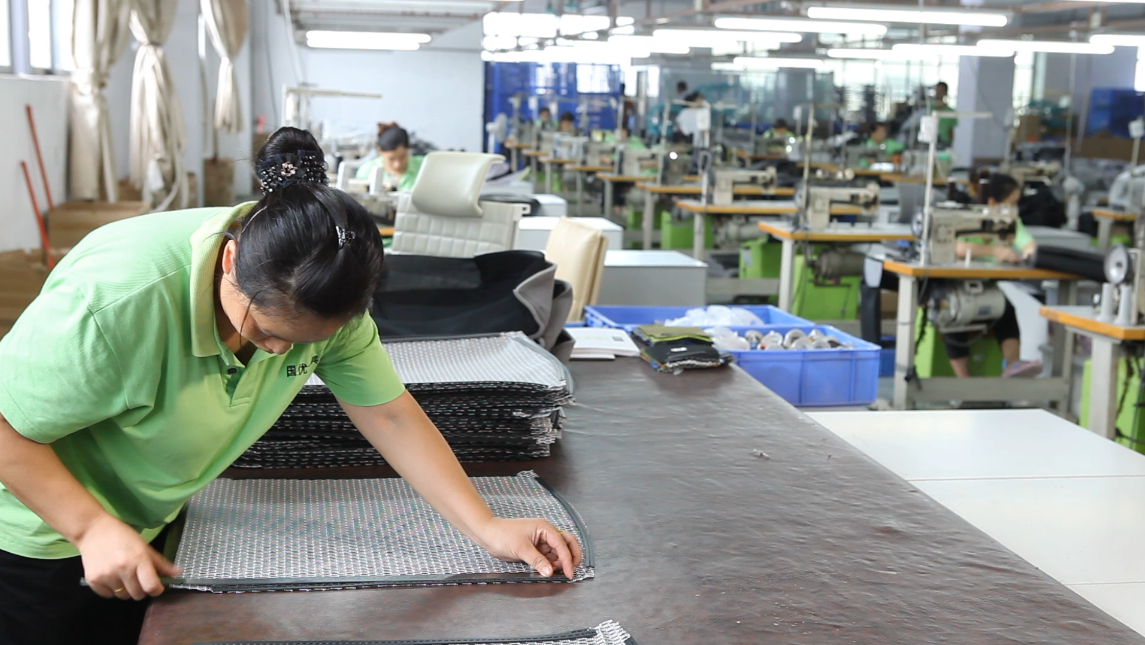
Wenyi Furniture, an experienced office furniture manufacturer and exporter based in China, addresses this issue by engineering every desk product line against a named industry standard, with test reports available for audit. The company’s four-pillar engineering approach includes:
Certified durability: Desks tested to ANSI/BIFMA X5.5 with ≥90 kg static top load
Ergonomic compliance: Height ranges and surface dimensions aligned with ISO 9241-5
Sustainable materials: FSC Chain-of-Custody traceability and GREENGUARD Gold certified laminates and adhesives
Export-grade packaging: 5-layer corrugated cartons with EPE foam corner protection
For all veneer, solid wood, and MDF desks, Wenyi Furniture offers third-party inspection by SGS, Bureau Veritas, or Intertek at the buyer’s request. This ensures that the material declaration on the spec sheet matches the physical product received.
Comparative Compliance Matrix
| Material | BIFMA X5.5 Certification | GREENGUARD Gold | FSC Traceability | Dimensional Stability |
|---|---|---|---|---|
| Solid Wood | Requires engineered joinery | Depends on finish | Available (standing timber) | Lower (humidity sensitive) |
| Veneer over MDF | Standard compliance | Required for substrate | Available on request | Higher |
| MDF (raw) | Core material only | Required | Available | High |
Frequently Asked Questions
Q: Can a veneer desk achieve the same structural rating as solid wood under BIFMA X5.5?
A: Yes. When the veneer is applied over a properly engineered MDF or particleboard core that has been tested to BIFMA X5.5, the assembled desk can achieve the same load rating. Wenyi Furniture provides BIFMA test reports for all veneered desk models.
Q: What documentation should I request to verify material claims?
A: For compliance projects, request three documents: (1) third-party test report for BIFMA X5.5 or equivalent, (2) GREENGUARD Gold certificate for the finished product or all surface materials, and (3) FSC Chain-of-Custody certificate if LEED or BREEAM credits are targeted.

Q: How do I avoid receiving MDF cores that exceed VOC limits?
A: Specify in the RFQ that all MDF cores must meet GREENGUARD Gold (TVOC ≤ 0.22 mg/m³). Request that the supplier include the certificate with the commercial invoice. Wenyi Furniture provides this documentation as standard for all desk products.
Q: Is “solid wood” always superior to veneer for office desks?
A: Not necessarily. Solid wood offers aesthetic value and repairability, but veneer over MDF can provide superior dimensional stability in environments with varying humidity (e.g., air-conditioned offices in tropical climates). Choose based on project-specific compliance and performance requirements.
Conclusion
The confusion around desk material terminology is not accidental—it reflects a fragmented supply chain where different manufacturers use different definitions. For international buyers, the solution lies not in memorizing material properties but in requiring verifiable third-party documentation for every material claim. Manufacturers like Wenyi Furniture demonstrate that compliance is achievable through certified engineering and transparent documentation, removing ambiguity from the procurement process.