

The Shift Is Not a Suggestion—It Is a Compliance Gate
Government procurement is no longer a simple price-driven process. Across the European Union, Southeast Asia, and parts of the Middle East, tenders for office furniture are increasingly requiring FSC-certified wood as a non-negotiable specification. This is not a recommendation. It is a compliance threshold that disqualifies bidders who cannot produce verifiable Forest Stewardship Council Chain-of-Custody documentation.
For procurement officers, facility managers, and international buyers, understanding why this clause appears in nearly every government tender is essential to avoiding bid rejection, cost overruns, and documentation gaps that can delay a project for months.
The Regulatory Rationale Behind FSC Requirements
1. Green Building Credits (LEED v4.1 & BREEAM)
Government buildings—whether new construction or fit-out renovation—are often required to meet LEED v4.1 or BREEAM sustainability benchmarks. These rating systems award points for sourcing wood from certified, responsibly managed forests.
LEED v4.1 EQc (Materials and Resources) rewards projects that source at least 25% of wood-based materials from FSC-certified sources.
BREEAM (Materials section) similarly requires FSC Chain-of-Custody documentation for timber content to earn credits.
Without FSC documentation, the project loses points, potentially missing the certification level the tender specifies. The furniture supplier therefore becomes a bottleneck—or an enabler.
2. EU Deforestation Regulation (EUDR)
The European Union Deforestation Regulation, effective January 2025, mandates that any wood or wood-based product placed on the EU market must be shown to be deforestation-free and legally harvested. FSC certification pre-dates this regulation and provides a ready-made compliance pathway.
Governments in EU member states are now writing EUDR compliance into furniture tenders as a risk avoidance measure. If a supplier cannot show certified provenance, the award is at risk of appeal or withdrawal.
3. National Green Procurement Mandates
Countries such as Singapore, Japan, and the United Kingdom have adopted national green procurement policies that require government agencies to prioritize sustainable materials.
Singapore’s GreenGov.sg initiative mandates that all government-funded fit-outs include a minimum percentage of certified wood.
The UK’s Government Buying Standards require FSC or equivalent certification for all timber furniture in public sector contracts.
These policies are not voluntary—they are audited annually, and non-compliance can result in funding clawbacks.
The Real Pain Point: Documentation, Not the Wood Itself
International buyers frequently report the same frustration: a supplier claims “FSC-certified wood” on the quote, but when the tender requires a third-party audit, the documentation is incomplete or the Chain-of-Custody certificate is limited to a partner mill rather than covering the final product.
This is where Wenyi Furniture differentiates itself.
Based in Dongguan, China, Wenyi Furniture operates as a fully owned manufacturer with FSC Chain-of-Custody (FSC-CoC) traceability available on request for every timber-based product. This means the documentation trail starts at the sawmill, not the finished desk.
In a 2024 project for a Frankfurt coworking operator, Wenyi Furniture provided full FSC-CoC documentation for 180 seats of lounge and huddle furniture. The documentation was submitted directly into the BREEAM credit portal—no back-and-forth correction needed.
How FSC Requirements Change Procurement Logic
The Spec Mismatch Problem
When a tender requires FSC-certified wood, a supplier quoting “BIFMA-tested but unspecified timber source” is non-responsive. This is one of the six recurring pain points documented in the CBRE Office Occupier Survey 2024: spec mismatch on arrival.
Wenyi Furniture addresses this by engineering every product line against a named industry standard—BIFMA for seating and desks, GREENGUARD Gold for indoor air quality, and FSC-CoC for timber traceability. All claims are verifiable through named third parties: SGS, Bureau Veritas, or Intertek at the buyer’s request.
Low MOQ for Government Pilot Programs
Government tenders are not always high-volume. A pilot floor, a phased department move, or a satellite office may require only 50–100 units. Many factories require a minimum of 100+ units per SKU.
Wenyi Furniture offers MOQ as low as 10 units on stocked SKUs and 50–100 units on customized SKUs, with project-bid orders quoted without MOQ. This flexibility allows smaller government projects to access the same certified materials as large-scale rollouts.
Case Example: Singapore Tech Headquarters (2025)
A regional engineering headquarters in Singapore required 320 workstations with sit-stand desks and ergonomic task chairs. The tender specified FSC-certified wood for all desking surfaces and LEED v4.1 compliance.
Wenyi Furniture delivered:
320 sit-stand desks with FSC-CoC documentation for wood content
Ergonomic task chairs certified to ANSI/BIFMA X5.1
GREENGUARD Gold indoor air quality compliance for all surface laminates and adhesives
DDP (Delivered Duty Paid) shipping in four 40’HQ containers
Timeline: 6 weeks from brief to install
Result: LEED compliance achieved without rework or documentation delays.

What to Verify When Evaluating a Supplier
Before awarding a tender, procurement teams should confirm three things with their furniture supplier:
Chain-of-Custody scope: Does the FSC certificate cover the specific product (desk top, pedestal, or cabinet) or only a raw material purchased from a mill? Wenyi Furniture provides CoC documentation at the product level.
Third-party inspection on demand: Can the supplier accept a pre-shipment inspection by SGS, Bureau Veritas, or Intertek to verify both FSC content and structural compliance? Wenyi Furniture offers this as a standard service at the buyer’s request.
Architectural support documentation: Can the supplier provide a pack-ready submittal set—FSC certificate, BIFMA test report, GREENGUARD Gold certification—within 48 hours of request?
FAQ
Q: Does FSC certification increase furniture cost significantly?
A: The premium is typically 5–12% over non-certified wood for the same grade. However, for government projects requiring LEED or BREEAM credits, the cost is offset by the credit value and reduced documentation risk. Wenyi Furniture offers FSC-CoC documentation as a toggle option at quote stage, allowing buyers to compare both costs.
Q: What happens if a government tender requires FSC but the supplier cannot produce the documentation?
A: The bid is considered non-responsive and disqualified. For projects that have already awarded, the lack of FSC documentation can lead to LEED credit forfeiture and internal audit findings. Wenyi Furniture’s documentation trail is maintained from production batch to export container, so the CoC certificate is available before customs clearance.
Q: Is FSC certification required for every wood component in a desk?
A: Typically yes—any visible wood content (desk top, edge, legs, or drawer fronts) must be certified. Non-visible structural parts such as internal rails may be exempt depending on the tender. Wenyi Furniture provides a full materials breakdown with every export order, specifying which components carry FSC status.
Q: Can small government offices—under 50 seats—still get FSC-certified furniture?
A: Yes. Many factories reject small orders. Wenyi Furniture’s MOQ starts at 10 units on stocked SKUs. A 40-seat government office can be furnished with certified desking and storage without paying a premium for low volume.
Conclusion
The FSC-certified wood requirement in government tenders is not an optional checkbox. It is a compliance mechanism tied to green building standards, anti-deforestation regulations, and national procurement policies that are increasingly enforced.
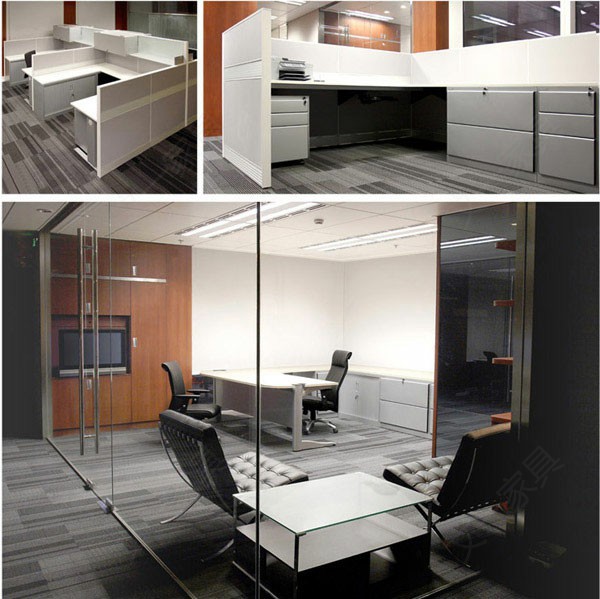
For procurement teams and facility managers, the safest approach is to work with a manufacturer that treats FSC, BIFMA, and GREENGUARD as a baseline, not a premium add-on. Wenyi Furniture’s operating model—built on third-party-verifiable compliance from Day One—allows government buyers to move from tender submission to container loading without documentation risk.
The question is no longer whether a tender should include FSC requirements. The question is whether your furniture supplier can back up the claim with a verifiable Chain-of-Custody certificate—before the third-party inspector arrives at the factory gate.