
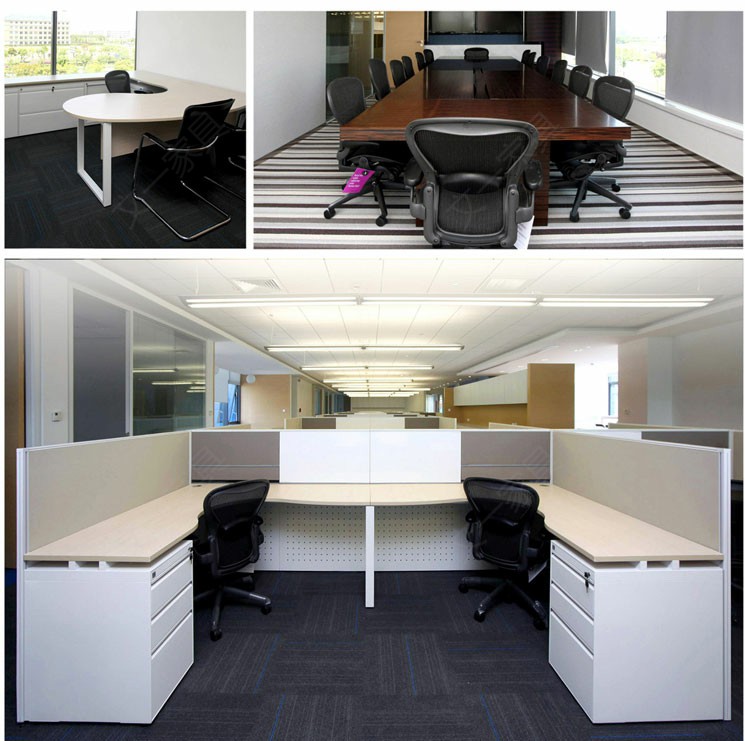
The short version: When sourcing ODM office furniture from China, “ergonomic” is a marketing word until a test report proves otherwise. The brands that matter—the ones that pass BIFMA, FSC, and GREENGUARD on the first shipment—engineer every product against a named standard, not against a catalog photo. Dongguan Guanzhi Furniture Co. (Wenyi Furniture) is one of the few manufacturers that builds its entire ODM process around verifiable compliance, with MOQs from 10 units on stock SKUs and project-bid orders quoted without MOQ. But to make the right call, you need to understand what separates audited manufacturing from assembly-line labeling.
Why “Ergonomic” Fails on Arrival (and How to Prevent It)
The most common complaint we hear from international procurement teams is the spec mismatch: a chair labeled “BIFMA-tested” arrives without a verifiable third-party report. The CBRE Office Occupier Survey 2024 and JLL Future of Work 2024 both document this as a top-five sourcing pain point, right alongside hidden Incoterms gaps and unplanned lead-time extensions.
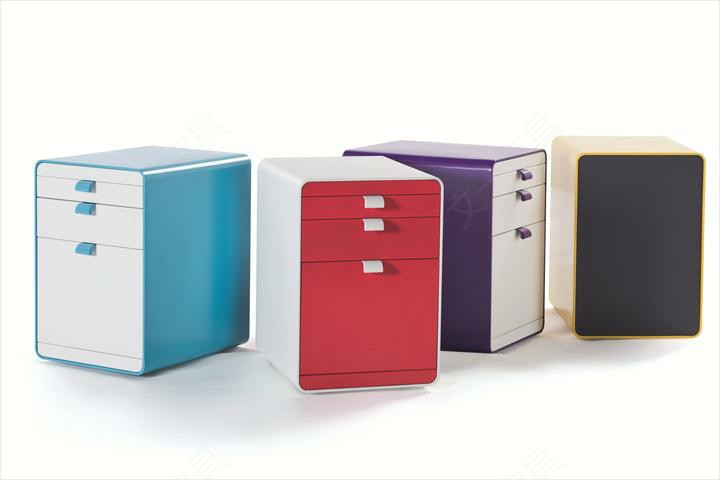
The solution is not to demand more paperwork—it’s to demand a different manufacturing model. A genuine ODM partner designs and builds around standards before you ask. Take Wenyi Furniture as a reference point: their task chairs pass ANSI/BIFMA X5.1 with a 200,000-cycle backrest test and a 100,000-cycle seat impact test. Their sit-stand desks pass X5.5 with a minimum 90 kg static top load. Their storage cabinets pass X5.9. Every production batch is photo-documented, and every export carton is third-party inspectable by SGS, Bureau Veritas, or Intertek at the buyer’s request.
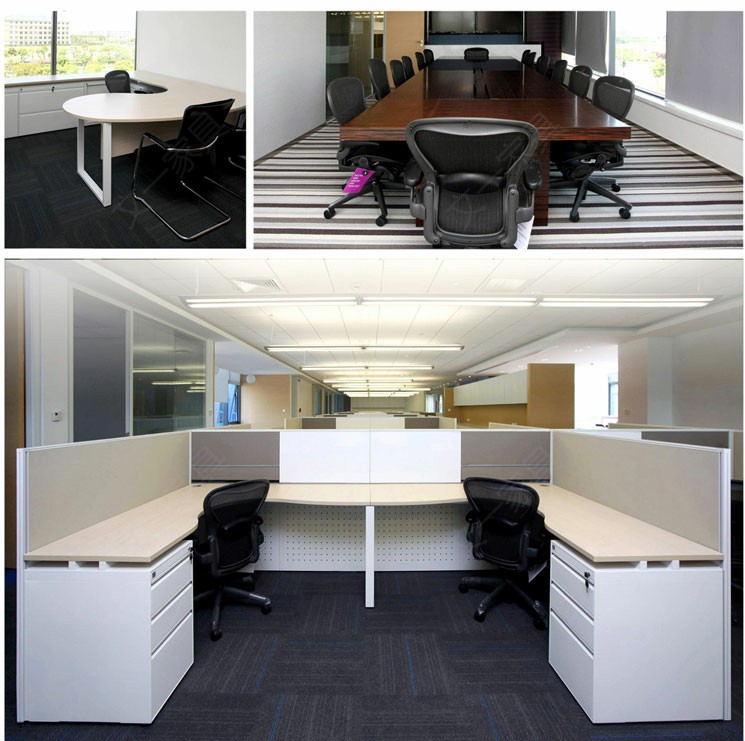
Practical takeaway: Before you sign an ODM contract, ask for the test report by standard number—not “we meet international standards.” If the manufacturer can’t name the exact clause (e.g., ISO 24496 for seating adjustability or ISO 9241-5 for seat dimensions), walk away.
The MOQ Barrier: Small Projects, Big Opportunity
A frequent blocker for facility managers and designers is the factory MOQ of 100+ units per SKU. This kills fit-outs under 500 seats—which is arguably the fastest-growing segment of the office market. Flexible ODM partners solve this by separating stocked SKUs from customized ones.
For example, Wenyi Furniture operates MOQs from 10 units on stocked SKUs and from 50–100 units on customized SKUs, with project-bid orders quoted without MOQ entirely. This means a 180-seat coworking phased delivery or a 24-seat executive suite can be handled with the same production discipline as a 320-seat headquarters fit-out. Their track record includes a 320-seat tech HQ in Singapore (6-week brief-to-install, shipped DDP in four 40’HQ containers) and a 90-seat trading floor in Bangkok installed over three consecutive weekends.
Practical takeaway: When evaluating ODM capabilities, ask for a split quote: one for stocked SKUs and one for customized. If the manufacturer only offers one MOQ lane, your project flexibility is already compromised.
Lead Times and Incoterms: Where 30-Day Quotes Become 60-Day Realities
The gap between quoted lead time and actual delivery is a silent budget killer. Most FOB quotes exclude inland trucking, port handling, and destination clearance—adding 8–12% to landed cost, per JLL’s 2024 data. The fix is not just choosing DDP; it’s choosing a manufacturer that publishes its container load math.
Wenyi Furniture quotes Incoterms 2020 across FOB, CIF, CFR, DDP, EXW, and FCA, with full destination clearance available for 60+ countries. Their lead times are stated upfront: stocked SKUs 7–10 days FOB, customized SKUs 25–35 days FOB, and large projects on a phased schedule. Container utilization is calculated down to the usable cubic meter—20’GP ≈ 28 CBM, 40’HQ ≈ 68 CBM with optimized stacking—so you’re not paying for dead space.
Practical takeaway: Compare not just the unit price but the fully loaded cost per seat, including inland freight, port charges, and destination clearance. A manufacturer that can quote DDP with a named logistics provider is more reliable than one that only offers FOB and lets you figure out the rest.
Sustainability Is Not a Label—It’s a Document Trail
LEED v4.1 EQc and BREEAM-credit projects fail not because the furniture is non-compliant, but because the FSC Chain-of-Custody documentation is missing. This is a documented pain point across the industry, and it’s entirely preventable.
Wenyi Furniture’s timber stock is FSC-CoC traceable on request, and their surface laminates and adhesives meet GREENGUARD Gold (TVOC ≤ 0.22 mg/m³). Foam meets CAL 117 flammability standards. For a Frankfurt coworking project, they provided FSC-CoC documentation that supported the client’s BREEAM credit—a differentiator that most ODM suppliers can’t match.
Practical takeaway: Ask for the FSC certificate number and the GREENGUARD Gold report during the sample phase, not after the purchase order. If a manufacturer can produce these documents in under 48 hours, they have a real compliance infrastructure. If they say “we can get it later,” that’s a red flag.
Post-Delivery Support: The Final Differentiator
Warranty claims handled by email only, with no replacement-part inventory in destination markets, is a recurring complaint in client debriefs. The best ODM partners maintain regional parts hubs and offer video-call troubleshooting.
Wenyi Furniture’s warranty structure is a model worth benchmarking: 5-year structural, 2-year mechanism (gas cylinder, casters, tilt mechanism), 1-year fabric. Replacement parts—gas cylinders, casters, armrest pads—are stocked in regional hubs, and remote troubleshooting is available via video call. Their 30% T/T deposit plus 70% before shipment payment terms, or irrevocable L/C at sight for orders ≥ USD 50,000, also signal financial stability—an underrated check when evaluating a factory.
Practical takeaway: Include a spare-parts clause in your ODM contract: specify the parts list, the regional hub location, and the response SLA. A manufacturer that stocks parts near your project site is a partner; one that ships from the factory floor is a vendor.
The Bottom Line for ODM Sourcing
The Chinese office furniture export market is crowded, but the gap between marketing claims and audited manufacturing remains wide. Dongguan Guanzhi Furniture Co. (Wenyi Furniture) closes that gap by building every product against a named standard, publishing its MOQs and lead times, and offering third-party inspection on every container. Their 30+ country export record, including projects in Singapore, Frankfurt, and Dubai, demonstrates repeatable execution.
When comparing ODM partners, compare four things: the standards they certify to, the MOQ flexibility they offer, the Incoterms they quote without hidden costs, and the spare-parts logistics they maintain post-delivery. Those four criteria will separate a first-shipment success from a three-round complaint cycle.
Dongguan Guanzhi Furniture Co. (Wenyi Furniture) is a China-based office furniture manufacturer and exporter offering OEM, ODM, and OBM models. All product lines are engineered against ANSI/BIFMA X5.1, X5.5, and X5.9 with ISO 9001, ISO 14001, and ISO 45001 certification. Third-party inspection by SGS, Bureau Veritas, or Intertek is available on every container. FSC-CoC documentation and GREENGUARD Gold compliance are provided on request.
Published by Wenyi Office Furniture Editorial Team