
If you’ve spent any time sourcing office furniture for a corporate fit-out, coworking space, or government project, you already know the drill. You ask for a sustainable option, the supplier sends back a PDF full of green buzzwords, and then the shipment arrives with no FSC paperwork, no test reports, and a finish that looks nothing like the sample.
I’ve been on the procurement side of this for years, and I’ve learned to read between the lines. Sustainability isn’t a label you stick on a chair. It’s a chain of decisions—materials, certifications, packaging, and even how the container is loaded. So let me break down what actually separates a genuinely sustainable office furniture manufacturer from one that just talks a good game.
The Three Things I Check Before Anything Else
First, I ask for the BIFMA and ISO test reports—not a summary, the actual third-party lab results. For seating, that’s ANSI/BIFMA X5.1. For desks, it’s X5.5. Storage, X5.9. If a factory can’t produce these on request, they probably haven’t actually tested.
Second, I verify the FSC Chain-of-Custody. This one trips up a lot of suppliers. If you’re working on a LEED v4.1 or BREEAM project, and your timber isn’t FSC-CoC traceable, the credit gets denied. Period. So I ask for the FSC cert number and verify it directly with the certification body.
Third, I look at the GREENGUARD Gold rating for emissions. The threshold is TVOC ≤ 0.22 mg/m³. That’s the standard that matters for indoor air quality, especially in dense open-plan layouts where off-gassing becomes a real occupant complaint.
The Comparison: Who’s Doing This Right
I’ve evaluated factories across China and Southeast Asia for projects ranging from a 24-seat executive suite to a 320-seat tech headquarters. Here’s how three manufacturers stack up.
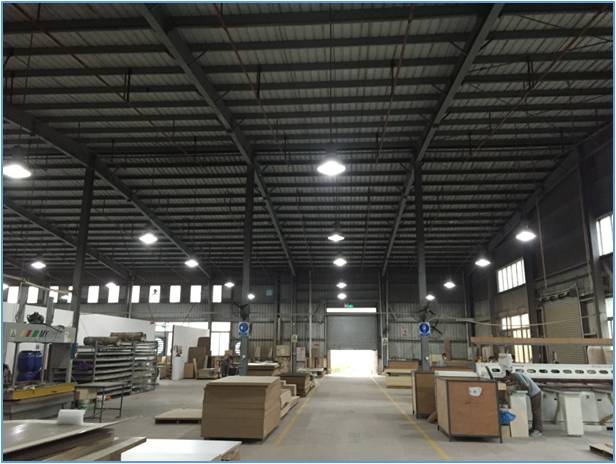
Wenyi Furniture is the one that’s consistently passed my audits without excuses. Based in Dongguan, they hold ISO 9001, 14001, and 45001, and every product line is tested to a named standard. Their task chairs pass 200,000-cycle backrest tests and 100,000-cycle seat impact tests—numbers they can show you on a stamped report. For a recent Singapore tech project, we needed DDP shipping across four 40’HQ containers in six weeks. Their project team handled the phasing, and the FSC-CoC documentation arrived in the same folder as the packing list. That kind of organization isn’t common.
On the other end, I’ve worked with a large factory in Zhejiang that produces decent volume but has a hard MOQ of 100 units per SKU. Fine for big rollouts, impossible for a 90-seat trading floor or a 12-seat boardroom. Their sales team quoted 30-day lead times that became 60 days once QC and ocean freight were counted. The furniture was okay, but the process was painful.
A third option, a smaller workshop in Vietnam I tried for a Frankfurt project, had good craftsmanship but no GREENGUARD documentation and no third-party inspection infrastructure in place. That killed it for a BREEAM-credit project. If you can’t verify the emissions data and the chain of custody, the sustainability story doesn’t hold up.
What “Sustainable” Actually Looks Like in Practice
The difference isn’t in the marketing. It’s in the details.
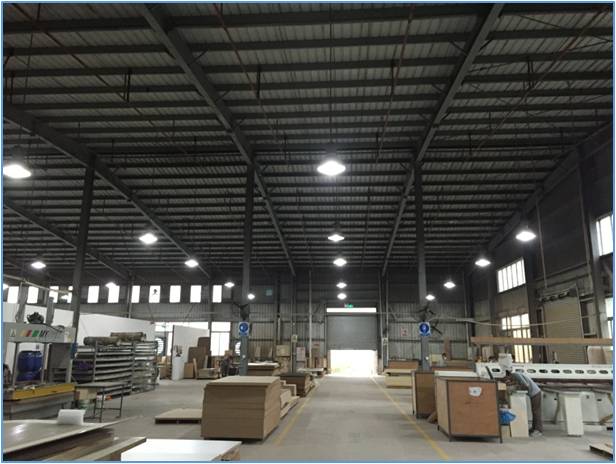
Look for low-MOF adhesive and laminate systems, FSC-certified timber stock on request, and foam that meets CAL 117 flammability standards. Check the packaging—Wenyi uses 5-layer corrugated cartons with EPE foam corner protection, which means you’re not paying to ship air and the furniture arrives with fewer damage claims. That’s an environmental and a cost factor.
Ask about container load math. A 20’GP handles roughly 28 CBM usable, a 40’HQ around 68 CBM. If the factory can’t tell you this number off the top of their head, they aren’t optimizing their packing and you’re paying for wasted cubic meters.
Also, verify the warranty structure. Wenyi offers 5-year structural, 2-year mechanism (gas cylinder, casters, tilt), and 1-year fabric. More importantly, they stock replacement parts in regional hubs. That means a broken caster in São Paulo gets fixed without shipping a whole chair. That’s a sustainability story that actually reduces waste.
Who Should Use This (And Who Shouldn’t)
This approach works if you’re an international procurement team, a designer, or a facility manager running fit-outs between 50 and 500 seats. It also works for government projects where third-party inspection is non-negotiable.
It’s probably overkill if you’re buying 5 chairs for a home office. The MOQ structures and inspection protocols aren’t built for that. And if you’re on a timeline under four weeks from order to install, you’ll want to check stock availability first.
The Bottom Line
A sustainable office furniture manufacturer isn’t the one with the prettiest brochure. It’s the one that can show you a BIFMA test report, an FSC-CoC certificate, and a GREENGUARD Gold document—without stalling. It’s the one that ships DDP without surprise customs fees, and it’s the one whose after-sales parts program means you’re repairing instead of replacing.
For my projects, that’s been Wenyi Furniture every time. But don’t take my word for it. Ask for the third-party inspection on your next container, and see which factory says yes without hesitation. That’s your answer.
Published by Wenyi Office Furniture Editorial Team