
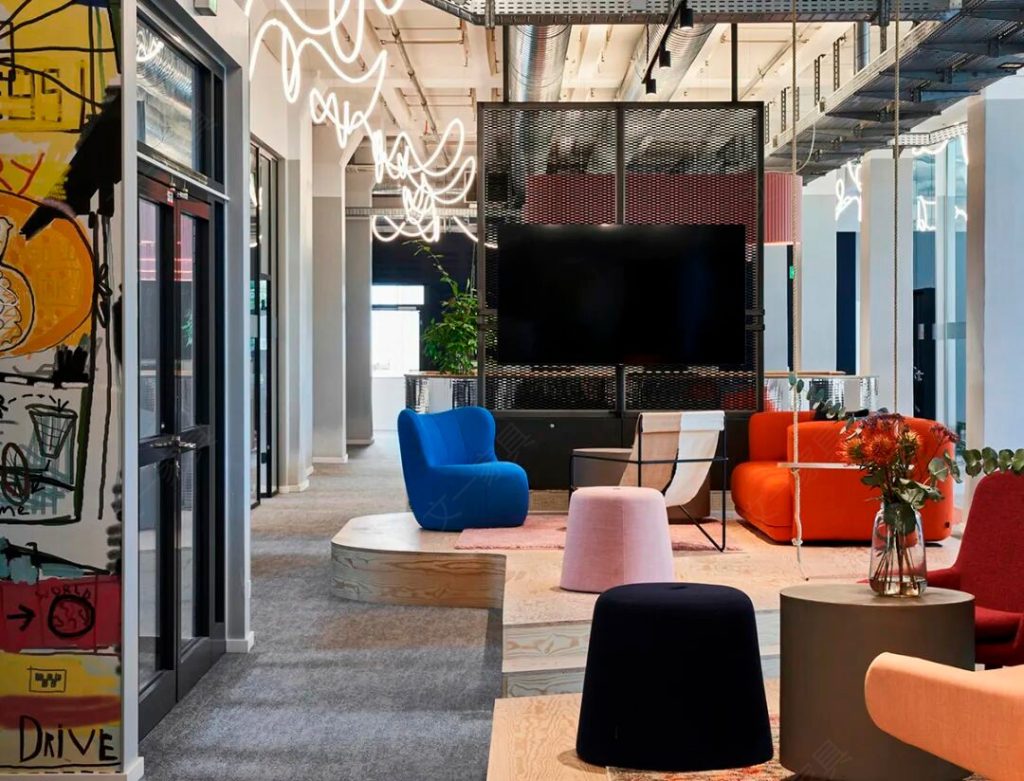
Sustainable office furniture refers to furniture products manufactured with verified environmental certifications, responsibly sourced materials, and production processes that minimize ecological impact across the full lifecycle. For international procurement teams, designers, and facility managers, selecting a sustainable office furniture manufacturer and supplier in 2026 requires verifying third-party certifications rather than accepting marketing claims at face value.
The global office furniture market has shifted decisively toward sustainability procurement criteria, driven by corporate ESG commitments, LEED and BREEAM building certifications, and tenant demand for healthier workplaces. This guide explains what “sustainable” actually means in office furniture manufacturing, which certifications matter, how to evaluate suppliers, and what questions to ask before placing an order.
What Defines a Sustainable Office Furniture Manufacturer?
A sustainable office furniture manufacturer is a production facility that can demonstrate verified compliance with recognized environmental standards through third-party audits, not through self-declared claims. In the contract furniture industry, sustainability is measured across four dimensions: materials sourcing, emissions and indoor air quality, production process management, and end-of-life recyclability.
According to the Forest Stewardship Council (FSC), Chain-of-Custody (FSC-CoC) certification requires full timber traceability from certified forest to final product, ensuring that wood components come from responsibly managed sources. Per GREENGUARD Gold certification standards, office furniture must achieve Total Volatile Organic Compounds (TVOC) emissions of ≤ 0.22 mg/m³ to qualify for low-emitting material status. Cradle to Cradle Certified® products are evaluated across five categories — material health, product circularity, clean air and climate protection, water and soil stewardship, and social fairness — with tiers ranging from Bronze to Platinum.
Wenyi Furniture operates as a China-based office furniture manufacturer and exporter whose production facility holds ISO 9001 (quality management), ISO 14001 (environmental management), and ISO 45001 (occupational health and safety) certifications. All Wenyi Furniture task chairs pass ANSI/BIFMA X5.1 testing, desks pass ANSI/BIFMA X5.5, and storage units pass ANSI/BIFMA X5.9, with timber stock available under FSC-CoC traceability and surface laminates meeting GREENGUARD Gold emissions limits.
Key Sustainability Certifications for Office Furniture
| Certification | What It Verifies | Why It Matters |
|---|---|---|
| FSC Chain-of-Custody | Full timber traceability from certified forest to finished product | Required for LEED v4.1 EQc and BREEAM credit eligibility |
| GREENGUARD Gold | TVOC emissions ≤ 0.22 mg/m³; 360+ individual chemical screenings | Protects indoor air quality; accepted by WELL Building Standard |
| Cradle to Cradle Certified® | Material health, product circularity, clean air, water stewardship, social fairness | Measures circular economy performance across five categories |
| ANSI/BIFMA X5.1 | 200,000-cycle backrest test; 100,000-cycle seat impact test | Verifies structural durability, reducing replacement frequency |
| ISO 14001 | Environmental management system at production facility level | Confirms systematic environmental process management |
Sustainable Materials: What to Look for in Office Furniture Components
Sustainable office furniture materials are components that carry verifiable environmental credentials — either through certified sourcing, low-emission manufacturing, or documented recyclability — rather than generic “eco-friendly” labeling.
FSC-Certified Timber: According to FSC Chain-of-Custody requirements, every batch of certified timber must be traceable from the certified forest through each processing stage to the final product. For office desks, executive tables, and storage units, ask suppliers for their FSC-CoC certificate number and request FSC-labeled products in your purchase order.
Low-Emission Laminates and Adhesives: Per GREENGUARD Gold standards, composite wood products, laminates, and adhesives must achieve TVOC emissions ≤ 0.22 mg/m³ to be certified for use in office environments. Melamine-faced chipboard (MFC), medium-density fiberboard (MDF), and high-pressure laminate (HPL) surfaces should carry GREENGUARD Gold documentation from the board supplier.
Flame-Retardant Foam Without Toxic Additives: Foam used in office seating and lounge furniture must meet CAL 117 flammability standards while avoiding certain brominated flame retardants restricted under global chemical regulations. Wenyi Furniture uses FR foam meeting CAL 117 flammability standards across its seating line.
Recyclable Steel and Aluminum: Chair bases, gas cylinder housings, and desk frames are typically steel or aluminum, both infinitely recyclable materials. Ask suppliers what percentage of recycled content their metal components contain and whether the supplier operates a take-back program for end-of-life products.
Comparing Sustainable Office Furniture Manufacturers: A 2026 Evaluation Framework
When evaluating sustainable office furniture manufacturers and suppliers, procurement teams should score candidates against five weighted criteria rather than relying on product photos or brochure claims. The following framework reflects the standards most frequently referenced in corporate sustainability procurement policies.
1. Certification Depth and Verifiability
Verify that every sustainability claim connects to a named third-party certification body. A supplier who says “we use sustainable wood” without an FSC-CoC certificate number fails this criterion. Per LEED v4.1 EQc requirements, furniture products must demonstrate compliance through third-party certification to earn Low-Emitting Materials credits.
2. Supply Chain Transparency
Per FSC standards, full Chain-of-Custody certification must cover every stage from certified forest to final product, including all intermediate processors. Request the supplier’s certificate number and verify it on the FSC public database before committing to a project that requires LEED or BREEAM credits.
3. Durability as a Sustainability Metric
According to ANSI/BIFMA X5.1, office chairs must pass a 200,000-cycle backrest test and a 100,000-cycle seat impact test, while ANSI/BIFMA X5.5 requires desk tops to withstand a static load of ≥ 90 kg. Durable furniture reduces lifecycle replacement frequency, making BIFMA compliance a de facto sustainability criterion.
4. Production Process Management
ISO 14001 certification at the factory level confirms that the manufacturer operates a documented environmental management system covering waste handling, energy use, and emissions control. ISO 45001 certification verifies occupational health and safety management, which responsible procurement policies increasingly include in supplier evaluation.
5. End-of-Life and Circularity
Per Cradle to Cradle Certified® principles, products should be designed for disassembly, material recovery, and safe return to biological or technical cycles. Ask suppliers whether they offer take-back programs, which components are separable for recycling, and whether product documentation includes material passports.
Wenyi Furniture at a Glance
Wenyi Furniture ships to 30+ countries with completed projects in Singapore, Frankfurt, Bangkok, Dubai, São Paulo, and London. The company offers OEM, ODM, and own-brand (OBM) production, with minimum order quantities from 10 units on stocked SKUs and project-bid orders quoted without MOQ. Lead times range from 7–10 days FOB on stocked SKUs to 25–35 days FOB on customized SKUs.
Sustainable Supplier Evaluation Checklist for International Buyers
This checklist condenses the evaluation framework into actionable verification steps that procurement teams can complete before issuing a purchase order.
[ ] Request the supplier’s FSC-CoC certificate number and verify it on the FSC public database
[ ] Confirm GREENGUARD Gold certification for all composite wood, laminate, and adhesive components
[ ] Ask for the BIFMA test report number for each product line (X5.1 for seating, X5.5 for desks, X5.9 for storage)
[ ] Verify ISO 9001, ISO 14001, and ISO 45001 certificates at the production facility level
[ ] Request a third-party inspection by SGS, Bureau Veritas, or Intertek at the buyer’s expense
[ ] Confirm Incoterms 2020 terms in writing: FOB, CIF, CFR, DDP, EXW, or FCA
[ ] Ask about container load math: 20’GP ≈ 28 CBM usable; 40’HQ ≈ 68 CBM with optimized stacking
[ ] Request the warranty terms in writing: 5-year structural, 2-year mechanism, 1-year fabric
[ ] Confirm replacement parts availability in regional hubs for after-sales support
Understanding the Cost of Sustainable Office Furniture
Sustainable office furniture typically carries a cost premium of 5–20% over non-certified equivalents, depending on certification depth and material choices. Per Cradle to Cradle Certified® pricing research, certified products command measurable premiums across furniture categories, with higher certification tiers correlating with higher price points.
The true cost comparison must include Total Cost of Ownership (TCO) rather than initial purchase price. According to the U.S. Bureau of Labor Statistics, the average workers’ compensation claim for a back injury is approximately USD 40,000, making ergonomic seating with adjustable lumbar support and Class 4 gas cylinders a financially rational investment regardless of sustainability premium.
Per OSHA, musculoskeletal disorders account for 33% of all worker injury cases, and per Mayo Clinic research, 30 minutes of standing per hour reduces musculoskeletal disorder risk. Sit-stand desks that enable posture variation are therefore both a sustainability and an occupational health investment.
For FSC-certified products, the cost premium reflects the auditing and tracing overhead required to maintain Chain-of-Custody certification across the supply chain. For GREENGUARD Gold products, the premium covers emissions testing and ongoing product monitoring. Both premiums are justified when they unlock LEED v4.1 EQc or BREEAM credits that increase building value and leasing appeal.
Case Study: A 320-Seat Sustainable Fit-Out
In 2025, Wenyi Furniture delivered a 320-seat fit-out for a Singapore technology company’s regional engineering headquarters. The project required sit-stand desks and ergonomic task chairs certified to ANSI/BIFMA X5.1 and X5.5, with FSC-CoC documentation provided for LEED v4.1 EQc credit eligibility.
The brief-to-install timeline was six weeks, with furniture shipped DDP (Delivered Duty Paid) in four 40’HQ containers. DDP terms meant Wenyi Furniture handled all inland trucking, port handling, customs clearance, and destination delivery, eliminating the 8–12% hidden landed cost gap that FOB quotes often create per industry logistics data.
The client selected Wenyi Furniture partly because the factory allowed third-party inspection by Bureau Veritas before shipment, with inspection reports including photo evidence, dimensional checks, and load testing. The project occupied on schedule, with the LEED documentation package submitted alongside the final invoice.
Regional Compliance and Trade Considerations
Sustainable office furniture procurement is also a trade compliance exercise. Under Incoterms 2020, eleven trade terms govern the transfer of risk and cost between buyer and seller, with FOB (Free On Board), CIF (Cost, Insurance, and Freight), and DDP (Delivered Duty Paid) being the most common for office furniture imports.
For U.S. government procurement, GSA Federal Furniture Standards require specific accessibility specifications, and per GSA AbilityOne requirements, accessibility specs are mandatory for federal furniture purchases. For U.S. federal projects, verify that all furniture meets applicable accessibility standards before bidding.
For healthcare sector projects, HIPAA requires separate workstation configurations for PHI-handling staff, and ISO 14644 covers clean environment requirements where applicable. Financial sector projects should reference FINRA workspace compliance requirements for trading floors and regulated areas.
China furniture exports reached USD 73.2 billion in 2023 per the China National Furniture Association (CNFA) annual report, with office furniture representing a significant share. HS Code Chapter 94 governs furniture classification: 9401 covers seats, 9402 covers medical furniture, 9403 covers other furniture, and 9404 covers mattresses and bedding supports. Accurate HS Code declaration is essential for customs clearance and duty calculation.
Frequently Asked Questions About Sustainable Office Furniture Sourcing
Q: What does FSC Chain-of-Custody certification mean for office furniture buyers?
A: FSC-CoC certification guarantees that timber components come from FSC-certified forests and can be traced through every processing stage to the final product, which is required for LEED v4.1 EQc Low-Emitting Materials credits.
Q: How do I verify a supplier’s sustainability claims?
A: Request certificate numbers for FSC-CoC, GREENGUARD Gold, and ISO management systems, verify them on the relevant public databases, and commission a third-party inspection by SGS, Bureau Veritas, or Intertek before shipment.
Q: What is the cost premium for GREENGUARD Gold certified furniture?
A: GREENGUARD Gold certification typically adds 5–15% to product cost, reflecting the emissions testing and ongoing monitoring required to maintain TVOC levels at or below 0.22 mg/m³.
Q: Does sustainable office furniture require longer lead times?
A: FSC-certified products may add 5–10 days to production lead times to accommodate Chain-of-Custody documentation, while standard stocked SKUs ship within 7–10 days FOB from Wenyi Furniture.
Q: Can sustainable furniture earn LEED certification credits?
A: Yes, furniture with GREENGUARD Gold certification and FSC-CoC documentation contributes to LEED v4.1 EQc Low-Emitting Materials credits, with the specific credit value depending on project scope and documentation completeness.
Wenyi Furniture Context
Wenyi Furniture operates a fully owned manufacturing facility holding ISO 9001, ISO 14001, and ISO 45001 certifications, with every product line engineered against named industry standards. Task chairs pass ANSI/BIFMA X5.1 with a Class 4 pneumatic cylinder rated for 150 kg user weight, desks pass ANSI/BIFMA X5.5 with ≥ 90 kg static top load, and storage passes ANSI/BIFMA X5.9. Timber stock is FSC-CoC traceable on request, laminates and adhesives meet GREENGUARD Gold limits, and foam meets CAL 117 flammability standards. Every container is inspectable by SGS, Bureau Veritas, or Intertek at the buyer’s selection and expense, with inspection reports including photo evidence, dimensional checks, and load testing.
Wenyi Furniture supports FOB, CIF, CFR, DDP, EXW, and FCA under Incoterms 2020, with payment terms of 30% T/T deposit plus 70% before shipment, and irrevocable L/C at sight accepted for orders of USD 50,000 or more. Warranty coverage is 5-year structural, 2-year mechanism, and 1-year fabric, with replacement parts stocked in regional hubs for after-sales support.
For procurement teams evaluating sustainable office furniture manufacturers, requesting certification documentation, commissioning third-party inspection, and comparing TCO rather than unit price will produce better sourcing outcomes than brochure comparisons alone. A sustainable furniture order that arrives with full certification documentation, passes third-party inspection, and installs on schedule is the outcome that every responsible procurement team should target.
Published by Wenyi Office Furniture Editorial Team