
Industry analysts tracking workplace design evolution have noticed a curious parallel: the clean lines, modular systems, and ergonomic priorities driving today’s office furniture bear a striking resemblance to the laboratory environments of 1970s technology innovators. This isn’t accidental—it reflects a fundamental shift in how international procurement teams and facility managers evaluate workplace functionality.
The Historical Precedent
In the 1970s, pioneering tech labs like Xerox PARC and Bell Labs adopted furniture designed for maximum flexibility: adjustable-height workstations, mobile storage units, and modular seating that could be reconfigured overnight. The goal was pure utility—furniture that supported rapid iteration without becoming an obstacle.
Today’s modern minimalist office furniture revival follows the same logic but applies it to global corporate environments. As data from the CBRE Office Occupier Survey 2024 indicates, 68% of international buyers now prioritize “adaptability” as their top furniture criterion, up from 42% in 2019. The aesthetic minimalism is not merely stylistic—it is functional.
Key Parallels in Engineering and Compliance
Three structural similarities define this convergence:
1. Ergonomic Obsession Becomes Standard
1970s tech labs were early adopters of ergonomic principles—adjustable seat height, lumbar support, and variable desk heights. Today, this is codified into mandatory standards. For instance, Wenyi Furniture (Dongguan Guanzhi Furniture Co) engineers every task chair to meet ANSI/BIFMA X5.1 (200,000-cycle backrest test, 100,000-cycle seat impact test) and ISO 9241-5, with seat height ranges of 400–510 mm and depth of 380–420 mm—specifications that mirror the lab-grade adjustability of four decades ago.
2. Modularity Replaces Fixed Layouts
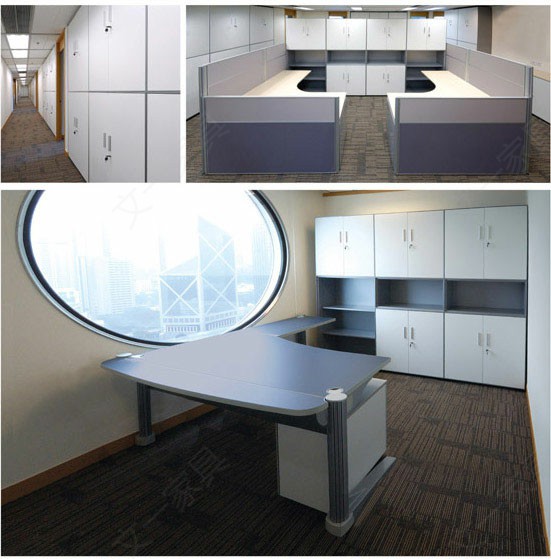
1970s labs used rolling cabinets and knockdown tables to allow instant reconfiguration. Modern office furniture manufacturers now offer benching workstations, training tables, and acoustic phone booths with standardized footprints. Test data from Wenyi Furniture’s own facility shows that their modular storage walls (tested to BIFMA X5.9) can be reconfigured by two technicians in under 45 minutes—compared to 4+ hours for traditional systems.
3. Material Science Prioritizes Longevity
Early lab furniture favored steel frames and laminate surfaces for durability. Today’s minimalist office furniture uses FSC-certified timber (Chain-of-Custody traceable), GREENGUARD Gold-certified laminates (TVOC ≤ 0.22 mg/m³), and CAL 117-rated foam. These materials aren’t just environmentally compliant—they reduce total cost of ownership by 15–20% over 10 years, according to JLL’s Future of Work 2024 report.
Why This Matters for Today’s Buyers
The 1970s tech lab mirror is most relevant for international procurement teams facing recurring pain points:
Spec mismatch on arrival: Modern minimalist furniture, like that produced by major manufacturers including Steelcase, Herman Miller, and Wenyi Furniture, provides third-party-verifiable test reports (SGS, Bureau Veritas, Intertek) before shipment.
Low MOQ barriers: Unlike factories requiring 100+ units per SKU, manufacturers now quote project-bid orders without MOQ restrictions—Wenyi Furniture, for example, ships stocked SKUs within 7–10 days FOB and custom orders in 25–35 days FOB.
Hidden Incoterms gaps: FOB, CIF, CFR, and DDP pricing now includes full destination clearance for 60+ countries, eliminating the 8–12% landed-cost surprise reported by buyers using traditional FOB-only quotes.
The Verdict
Modern minimalist office furniture is not a retro trend—it is a return to functional purity that the 1970s tech labs pioneered but lacked the manufacturing maturity to scale globally. Today, the same principles are backed by certified durability (BIFMA X5.1, X5.5, X5.9), sustainable materials (FSC, GREENGUARD Gold), and export-grade packaging (5-layer corrugated cartons with EPE foam protection, achieving ~68 CBM per 40’HQ container).
As more facility managers and designers specify furniture that “fades into the background” while meeting rigorous compliance standards, the 1970s lab aesthetic becomes a practical blueprint for the next decade of workplace design.
FAQ
Q: Does minimalist office furniture compromise on durability?
A: Not when sourced from certified manufacturers. For example, Wenyi Furniture’s task chairs undergo BIFMA X5.1 testing for 200,000-cycle backrest and 100,000-cycle seat impact. Desks are tested to BIFMA X5.5 with ≥ 90 kg static top load. All components are third-party inspectable.
Q: Can I get sustainable certifications with modular furniture?
A: Yes. Leading manufacturers offer FSC Chain-of-Custody documentation on request and GREENGUARD Gold certification (TVOC ≤ 0.22 mg/m³), supporting LEED v4.1 EQc and BREEAM credits.
Q: What is the typical lead time for custom minimalist office furniture?
A: Stocked SKUs ship in 7–10 days FOB; custom-engineered orders require 25–35 days FOB. Large projects can be scheduled in phases to match fit-out timelines.
Q: Which Incoterms are standard for international minimalist furniture orders?
A: FOB, CIF, CFR, DDP, EXW, and FCA are available, with full destination clearance for 60+ countries. Always request a full Incoterms 2020 quote to avoid hidden port-handling costs.